 EN


In a marketplace where first impressions carry enormous weight, packaging is far more than a functional container — it is a silent brand ambassador. custom gift paper bags have become one of the most cost-effective tools available to brands that want to be remembered after the sale. From boutique retailers to corporate gifting programs, the way a product is handed over communicates values, quality and personality before the recipient even opens the package.
That effect is not accidental. When a brand invests in thoughtfully designed, well-made packaging, it signals professionalism and attention to detail at the exact moment a customer is paying attention. This article explains how custom gift paper bags elevate brand image, covering the perception mechanisms behind them, the design decisions that matter most, and the commercial results they support.

Why Packaging Shapes Brand Perception
Packaging as a Physical Brand Touchpoint
Every interaction contributes to how a customer reads a brand, and packaging is the one touchpoint that arrives in the customer's hands. Custom gift paper bags engage several senses at once: the weight and texture of the paper stock, the registration of a printed logo, the stiffness of the handles. These details shape how the brand feels at the moment of receiving a gift or a purchase, when emotional attention is at its highest.
Unlike a digital advertisement that disappears after a click, a paper bag has physical persistence. Recipients reuse attractive bags for errands, storage and other gifts, which extends the brand's reach well beyond the original transaction. That repeated, unpaid exposure is what makes branded bags a genuinely high-return investment rather than a line item to be trimmed.
The Psychology of Perceived Value
Consumers consistently associate better packaging with better products, even when the contents are identical. A bag that uses substantial paper, a controlled colour palette and clean typography triggers that judgement immediately: the item inside feels more considered, and therefore more valuable. The same logic works in reverse, which is why thin stock and blurred print quietly erode the value of whatever sits inside.
The effect is strongest in gifting. A well-presented bag tells the recipient that the giver, or the brand, took extra care. The bags therefore do two jobs at once — they flatter the recipient and they raise the reputation of the business handing them over.
Design Decisions That Make Custom Gift Paper Bags Work Harder
Logo Placement and Visual Consistency
Logo scale is the most consequential decision on a printed bag. Too small and the bag reads as generic; too large and it reads as shouting. The workable middle is a mark that is instantly recognisable at arm's length but still leaves the paper room to breathe. Printed bags give a brand full control of that balance, which stock bags never can.
Consistency matters as much as scale. When the colours, typefaces and graphic devices on a bag match the website, the storefront and the business card, customers experience one coherent brand. That coherence builds the familiarity that loyalty rests on, and it allows seasonal or product-line variations without losing recognition.
Material, Finish and Handle Selection
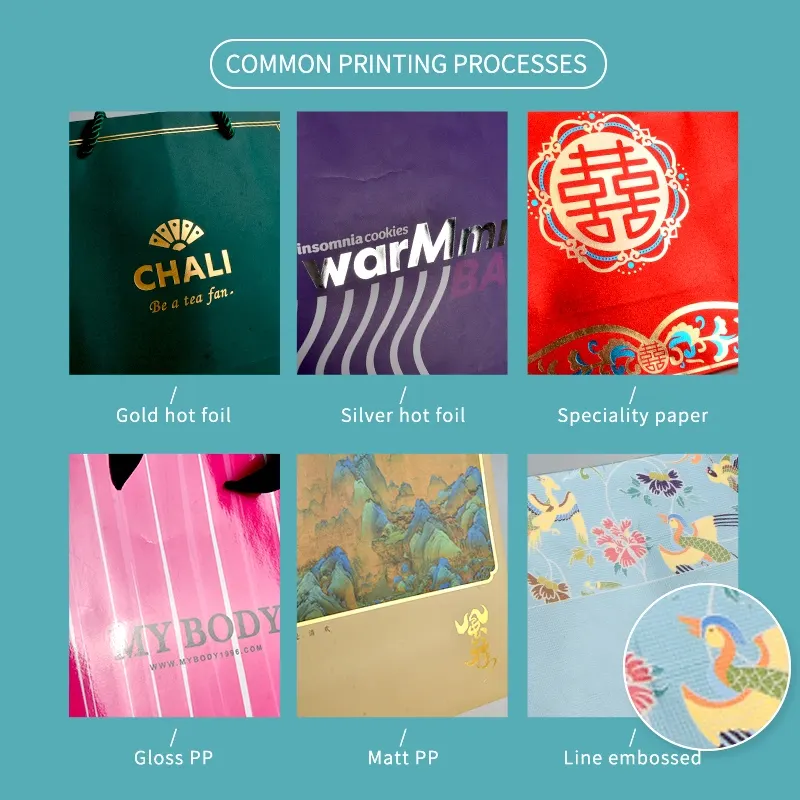
Substrate and finish communicate before anyone reads a word. Matte lamination reads as understated and modern; gloss reads as energetic and accessible; uncoated kraft reads as honest and sustainable. Each choice is a statement, and deliberate choices are what separate branded packaging from packaging that has simply been decorated.
Finishing is where a bag stops being a carrier and becomes an object people keep. Hot stamping, embossing, debossing and spot UV add depth that photographs well and feels expensive in the hand. A manufacturer running two Heidelberg four-colour presses with in-house hot stamping, embossing and laminating can hold that quality across a full production run, not only in an approved sample.
Handles deserve the same attention. Twisted paper handles suit casual boutique retail, ribbon handles signal premium gifting, and flat die-cut handles give a clean contemporary silhouette. When custom gift paper bags are produced from paper, print and handle in one workflow, these combinations can be tested together before a full order is placed.
From Brand Image to Business Results
Memorable Unboxing and Repeat Purchase
Unboxing is now part of the product. A bag that photographs well travels further than the customer who carried it, and social sharing turns packaging into marketing that costs nothing per impression. More importantly, consistent presentation sets an expectation: customers who associate a brand with careful packaging are more likely to return for the same experience.
| Consideration | Generic stock bag | Custom gift paper bags |
|---|---|---|
| Brand recall | Low; forgotten once the purchase is unpacked | High; logo and colour stay in use after the sale |
| Perceived value | Neutral at best, often negative | Reinforces the intended price point |
| Material and finish | Limited to catalogue options | Paper weight, lamination, foil and handle chosen together |
| Seasonal flexibility | None without changing supplier | Limited editions built on the same core identity |
Supporting Premium Pricing
Brands that want to hold a higher price need every touchpoint to support it. Packaging is the last physical signal before the customer forms a judgement about value, and a flimsy bag undercuts a premium product faster than almost any other detail. When paper, print and finish are aligned with the price point, the price becomes easier to accept and easier to defend against cheaper competitors.
The same logic applies in B2B: distributors judge a supplier by how the sample arrives as much as by the quotation.
Sustainability and Brand Storytelling
Eco-Materials as a Brand Statement
Buyers now ask what a bag is made of, not only how it looks. Recycled and responsibly sourced paper, water-based coatings and paper-based handles let a brand make a credible environmental claim instead of a decorative one. For distributors and international chains, that credibility is increasingly part of vendor qualification, so the material conversation belongs at the start of a project rather than at the proof stage.
Storytelling on Every Panel
The inside of a bag, the base and the gussets are printable surfaces that cost little to use. A line about sourcing, a care note or a short thank-you turns a carrier into a narrative medium. QR codes can bridge the bag and the digital journey — a reorder page, a loyalty sign-up or a collection launch — giving custom gift paper bags a second life as a conversion channel rather than a cost centre.
FAQ
How do custom gift paper bags differ from stock bags in brand impact?
Stock bags carry no brand meaning, so they are forgotten with the packaging waste. Custom gift paper bags are built around a specific logo, colour system and finish, which makes them recognisable in use and keeps the brand present long after the purchase. The difference shows up in recall, in perceived value and in how willingly customers reuse the bag.
Which businesses benefit most?
Retail, cosmetics, fashion, food and beverage, hospitality, specialty goods and corporate gifting see the clearest return, because those categories depend on emotional connection and perceived quality. Any business whose product is handed to a customer in a bag can use packaging to reinforce positioning, including packaging distributors who resell to those sectors.
Are custom gift paper bags practical for smaller order volumes?
Existing bag sizes and standard handle options reduce the tooling cost that once made custom packaging a volume-only purchase. Many brands start with a trial run on one or two sizes, confirm how print and paper perform in real use, then scale up.
How can a brand keep its bags aligned with its identity?
Work from a written style guide covering logo clear space, colour references, typography and acceptable finishes, and share it with the supplier before prepress begins. Approve a physical sample rather than a screen proof, because paper shade, coating and ink all shift colour, and confirm that the approved sample becomes the reference for every reorder.
Packaging is the cheapest media a brand owns and the only one the customer takes home. Treated as a design decision rather than a purchasing afterthought, custom gift paper bags carry a brand's positioning into the street, into photographs and into the next gift, which is precisely why they remain one of the most efficient image-building investments in retail.