 EN


Kraft bowls look like the obvious sustainable choice, and that is exactly why they need scrutiny. The brown paper reads as unbleached and low-impact, while the lining that makes the bowl hold soup is usually invisible — and that lining decides whether the bowl is compostable, recyclable, or neither. kraft bowls are favoured by eco-conscious restaurants for good reasons, but the reasons are more specific than the colour.
This article sets out what kraft genuinely delivers, where the sustainability claim depends on the coating, and how the format performs on soup, sauce and delivery.
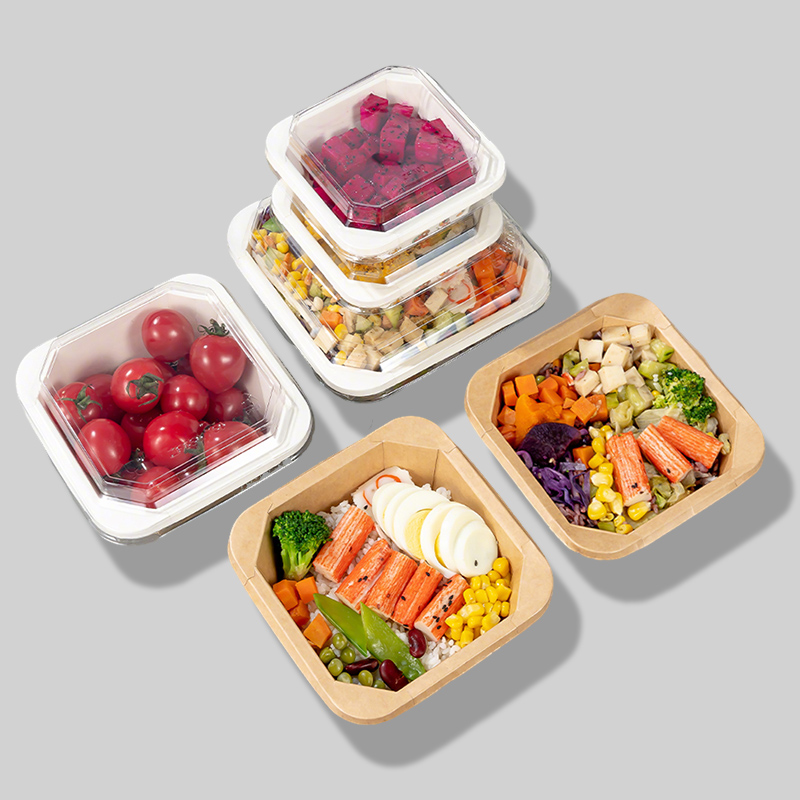
What Kraft Bowls Actually Deliver
Fibre, Finish and the Look
Kraft bowls are pressed from pulp with longer fibres, so the sheet tears less readily and holds a crease without cracking — which is why a kraft bowl survives being nested, filled and carried without the rim deforming. The unbleached surface also prints well in one or two colours, and that restraint is a large part of why the format reads as craft rather than commodity.
The tone is functional as well as aesthetic. A warm brown hides the grease marks that show immediately on a white bowl, so a portion of curry or fried rice still looks presentable after ten minutes in a bag. For takeaway, that is a real advantage: presentation damage is what customers photograph.
Why Operators Choose It
Kraft bowls sit outside most single-use plastic restrictions, carry lower extended producer responsibility exposure than plastic in many markets, and ship nested so storage is cheap. They also carry print at short runs, which lets a small restaurant brand a bowl without a large setup commitment.
The practical case for kraft bowls is the same as for any paper format: fewer compliance surprises, less storage, and a surface that makes the food look considered.
The Coating Question in Kraft Bowls
Three Lining Options
A kraft bowl without a barrier fails in minutes, so almost every foodservice version carries one. Polyethylene gives the strongest moisture hold and rules out composting in most systems. A water-based coating keeps the bowl compatible with organic waste where a facility accepts food-soiled packaging, but holds less grease over long contact. PLA sits between the two and behaves differently again in a home heap, where it will not break down.
This single choice determines both performance and the disposal story, and it is the question most buyers forget to ask. A supplier who cannot name the lining has not specified the product.
What That Does to the Claim
"Compostable kraft bowls" is only true of a specific construction, in a specific facility. A PE-lined bowl will not break down in a garden heap and is commonly rejected by industrial composters that accept food waste; a coated bowl is also usually excluded from paper recycling, because the film has to be separated from the fibre.
The defensible position is narrower than the marketing: state the fibre source, state the lining, and state where the bowl can actually go. Restaurants that print a leaf without those three facts create a compliance risk for themselves and for the distributor who supplied them.
Performance of Kraft Bowls
Soup, Sauce and Heat
Kraft bowls handle hot, saucy food well when the barrier is right: the wall holds shape under a heavy portion, and a rolled rim resists the deformation that starts most leaks. What fails is an under-specified bowl holding broth for a long delivery — the base softens first, then the seam.
Venting matters for anything crisp served in the same bowl, but for soup the priority is a sealed base and a lid that snaps on without relying on exact alignment. Heat itself is not the problem; time and moisture are.
Structure, Rim and Nesting
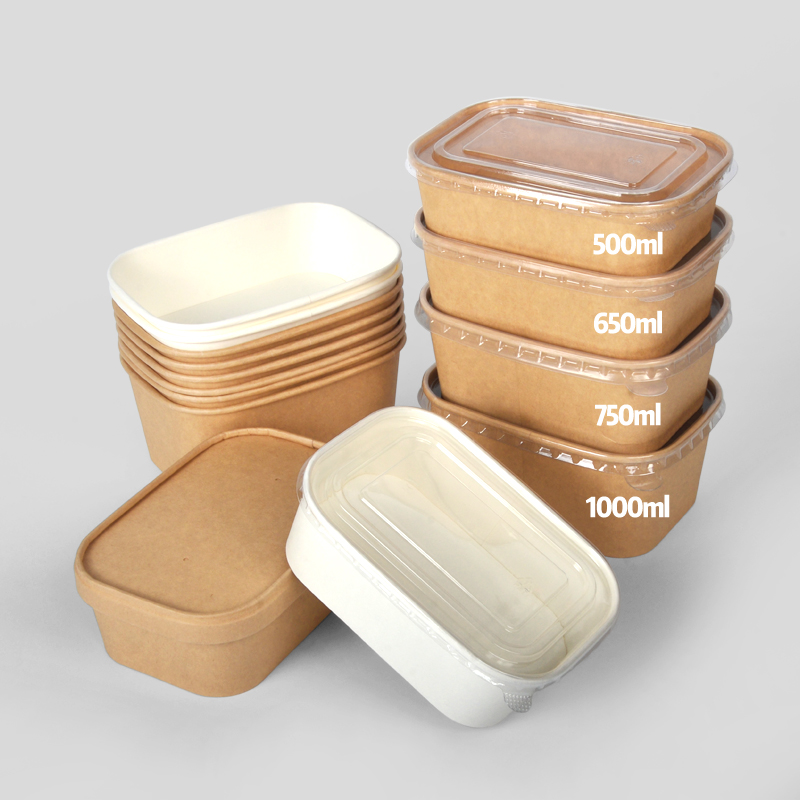
Geometry decides whether a kraft bowl feels solid. A rolled rim resists crushing, a tapered wall lets bowls nest and de-nest without jamming, and a stepped base spreads load away from the centre. Thickening the wall is the expensive way to add strength; changing the profile is the cheaper one.
Nesting is an operational detail with a cost attached: bowls that jam slow service at peak, and bowls that nest too loosely waste carton volume, which is paid for in freight rather than in the piece price.
Kraft Bowls: Cost and Operations
Landed Cost, Not Piece Price
Kraft bowls usually sit close to plastic on piece price at volume, and the differences move to freight and storage. Bowls are bulky: carton dimensions decide how many units fit in a container, and a taller carton can cost more across a shipment than a discount on the unit price saves.
Print and tooling are charged per run rather than per bowl, so a branded bowl gets cheaper as quantity rises. Standardising on two or three sizes saves more than squeezing the unit price.
Storage, Packing and Lids
Nested kraft bowls take a fraction of the space of rigid containers, and a pre-formed bowl needs no assembly at the pass. The lid is the weak point: a lid that does not seat properly turns a good bowl into a leak, so bowls should be approved with their own lid rather than a generic one.
Capacity is the quiet risk with kraft bowls in peak season. A factory running a dozen bowl moulding machines at a daily output in the hundreds of thousands of pieces can absorb a spike; a small converter cannot, and the shortfall arrives in your busiest month.
Compliance and Brand for Kraft Bowls
Documentation Worth Holding
A food contact report for kraft bowls should name the board, the coating and the ink used on the specific bowl, not the material family. Quality systems such as ISO 9001 or BRC support the consistency argument, and compostability certification is only useful when it names the finished bowl and applies in the destination market.
Print and Positioning
Kraft bowls take four-colour print, hot stamping and spot UV, and one strong colour on the natural tone usually looks better than a full-bleed design fighting the substrate. The bowl is often the only branded object a delivery customer keeps, which makes the print budget easier to justify than a poster.
| Specification point | Why it matters |
|---|---|
| Lining type | Decides both leak performance and disposal route |
| Base construction | Where soup bowls fail first |
| Lid pairing | A rim mismatch produces leaks in transit |
| Certification scope | Makes the printed claim defensible |
FAQ
Are kraft bowls safe for hot food and liquids?
Yes, when the lining is rated for hot liquid and the base is fully sealed. A bowl specified for dry or semi-dry food is the wrong choice for broth, however good the paper.
Do they really compost?
Only the version with a compatible coating, in a facility that accepts food-soiled packaging. A PE-lined bowl does not, and neither does one joined to a plastic lid.
Can kraft bowls be branded?
Yes, at short runs as well as long. Proof on the actual kraft stock: the brown tone shifts every ink warmer, and a logo approved on screen will not match the delivered bowl.
How do they compare in cost with plastic?
Piece prices are often close at volume, and kraft usually wins on storage and freight per unit. The comparison should include the lid and the failure rate.
Eco-conscious restaurants favour kraft bowls because the format looks honest, stores cheaply and prints well — but the environmental case only holds when the lining matches the disposal route. Ask what the bowl is lined with before asking what it is made of.