 EN

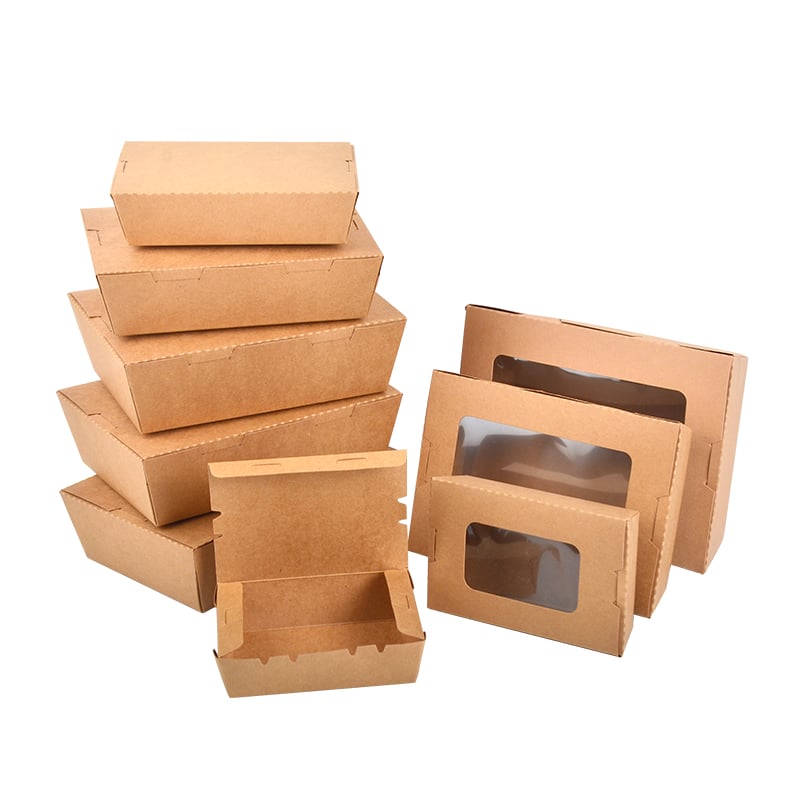
The change in takeaway packaging did not start with customers asking for it. It started with legislation: plastic restrictions in one market, extended producer responsibility fees in another, and procurement rules that quietly removed foam and single-use plastic from public contracts. Operators then discovered that eco-friendly take away boxes had become good enough to use — which is the part of the story that actually made the shift stick.
This article explains what is driving adoption, where the material genuinely performs, and where a specification still needs care before a menu is committed to it.
Regulation Is the Forcing Function
Bans, Fees and Procurement Rules
Single-use plastic rules now differ by country, region and sometimes city, which means a packaging specification approved in one market can fail in the next. Add extended producer responsibility schemes, where the brand or the operator pays for end-of-life management, and packaging stops being a neutral purchase: the material choice carries a recurring fee.
Eco-friendly take away boxes reduce that exposure on two fronts. They usually sit outside single-use plastic restrictions, and fibre-based formats typically carry lower EPR liability than plastic. For a chain operating across borders, that is a compliance argument before it is an environmental one.
What Compliance Actually Requires
Being allowed to sell the box is a documentation question. Food contact reports must cover the board, the barrier and the ink; any compostability claim needs certification valid in the destination market; and a recyclability message needs to be true of the whole pack, including any window film or label.
This is where suppliers separate. One can map each document to a specific SKU; another sends a folder of logos. The first is auditable, the second creates work for the buyer every time a customer's quality team asks a question.
Why Bagasse Earns Its Place
Heat, Grease and Structural Performance
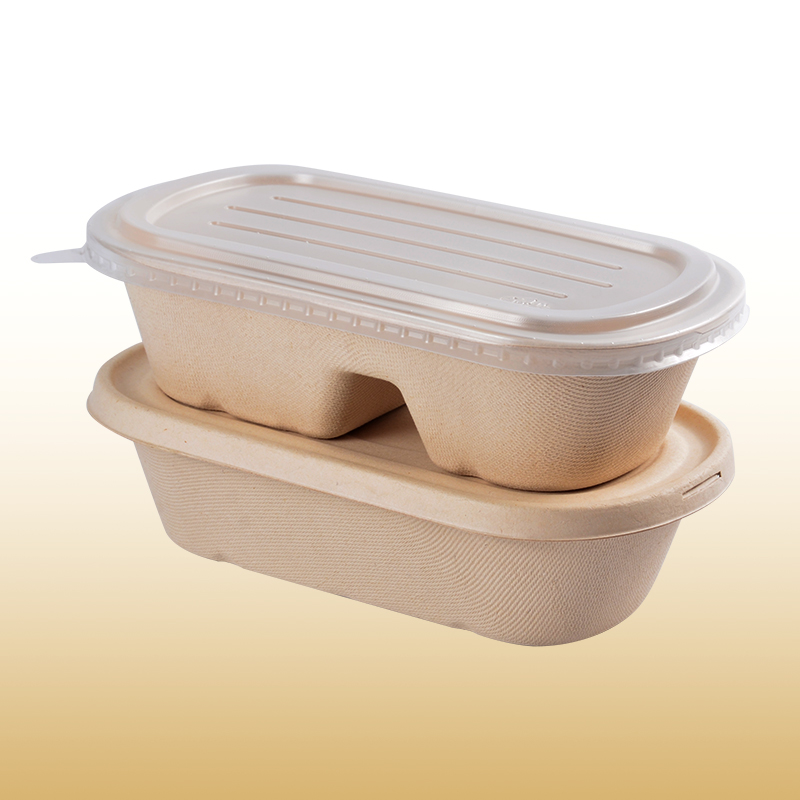
Bagasse — the fibre left after sugarcane is crushed — is moulded into a rigid box with no tree pulp and no plastic liner in its base form. That gives eco-friendly take away boxes made from it a genuine advantage on hot, greasy food: the wall holds shape under a heavy portion, the surface resists oil better than plain paperboard, and there is no laminated film to peel at the corner.
The material also tolerates a microwave pass and refrigerated storage, which matters for operators who cannot keep separate packaging for hot and cold menus. For most takeaway formats — rice, noodles, curries, grilled items, salads — the performance gap with plastic has closed.
Where Bagasse Still Needs Care
The honest limits are moisture and time. Bagasse is hygroscopic, so a very wet dish held for a long delivery will soften the base unless the box carries a water-based barrier, and a thin wall flexes under a heavy fill. Soup-style products need a different format, not a hopeful specification.
Lidding is the second weak point. A lid that does not seat properly turns a good box into a leak, and hinge fatigue shows up after repeated opening. Eco-friendly take away boxes should be tested as a complete system — box, lid and fill weight — rather than approved from a catalogue photo.
Operations and Cost
Cost per Order, Not per Box
On piece price, fibre packaging is usually close to plastic at volume and occasionally higher. On cost per order, the comparison shifts: fewer remakes from crushed or leaking packs, lower EPR fees, and no separate waste contract for a plastic stream. Operators who compare only the invoice line tend to underestimate the second group of costs.
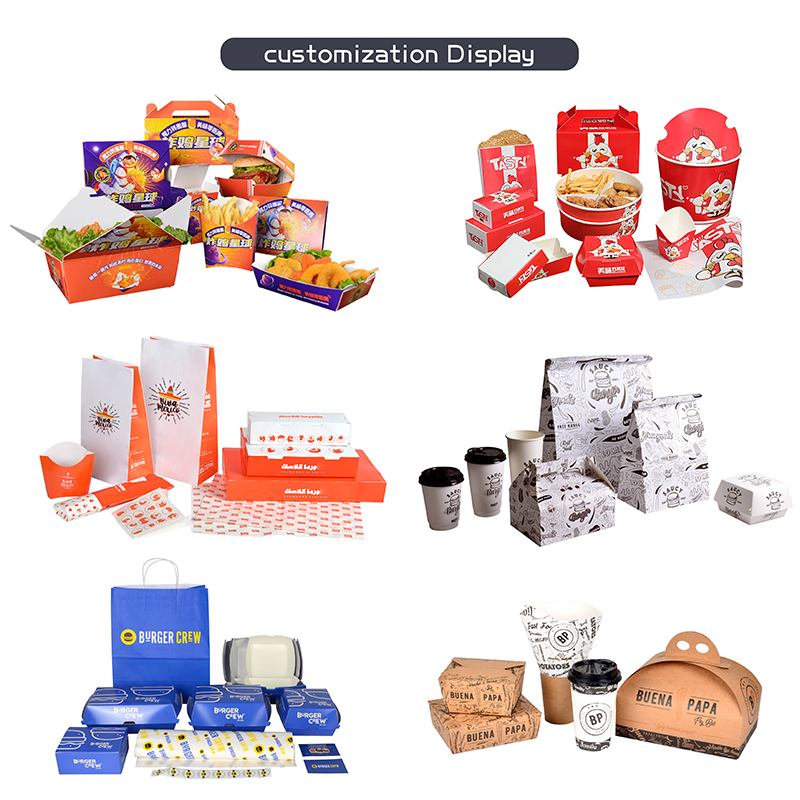
Volume drives the rest. Tooling and print setup are charged once per run, so the branded box gets cheaper as quantity rises, and standardising on two or three sizes reduces both the SKU count and the storage footprint.
Storage, Freight and Filling Lines
Moulded boxes nest but do not flatten, so carton cube matters more than with folded cartons. A supplier that can quote units per carton and container loading quantity saves more money than one that shaves a fraction off the unit price. Check that the box fits the filling line and the delivery bag before the order is placed, because a box that is two millimetres too wide is a box that does not work.
Customer and Contract Value
Winning Corporate and Institutional Business
Corporate catering and institutional buyers now screen packaging as part of their own reporting. A supplier or caterer that can evidence eco-friendly take away boxes with real documentation answers a question the client has already been asked by its sustainability team — which shortens procurement and sometimes decides the contract.
For consumer-facing operators, the benefit is simpler. Packaging is the most visible environmental signal a restaurant has, and a plain kraft box with a clean print reads as a decision rather than a default.
Claims That Survive an Audit
The risk is not the material; it is the sentence printed on the lid. "Plastic-free" fails if the lid contains a film. "Compostable" fails if the local facility rejects food-soiled packaging. "Recyclable" fails if grease contamination rules it out. Every claim should be checked against the specification and against what the customer can actually do with the box.
| Specification | Why it matters |
|---|---|
| Barrier type and coverage | Decides whether a wet dish holds and whether composting is possible |
| Wall thickness and fill weight | Prevents flex and base failure under heavy portions |
| Box and lid as one system | Stops leaks caused by rim mismatch |
| Carton cube | Drives freight cost for a bulky format |
| Certification scope | Determines whether the printed claim is defensible |
FAQ
What are eco-friendly take away boxes made from?
Mostly moulded fibre — sugarcane bagasse, bamboo or recycled paper — with a water-based barrier, plus paperboard formats for folded boxes. PLA appears in some lids and films. The material matters less than the specification behind it.
Can they handle hot and liquid food?
Hot and greasy, yes. Very liquid dishes need a barrier and a box with a sealed base, and long holding times still favour a different format. Test with the real dish at the real temperature rather than with a dry sample.
Do they cost more than plastic?
Often close at volume, and the gap narrows once EPR fees, waste contracts and remake rates are included. Freight is the hidden variable, because moulded boxes are bulky.
Are they really compostable?
Only when the coating allows it and a facility accepts food-soiled packaging. Certification should name the finished product for that market. Without the facility, the box goes to general waste whatever the lid says.
Eco-friendly take away boxes are transforming the industry because the constraint finally moved: regulation made plastic expensive and uncertain, and the fibre formats stopped being the compromise. The operators winning with them are the ones who specified the box rather than simply ordering it.