 EN


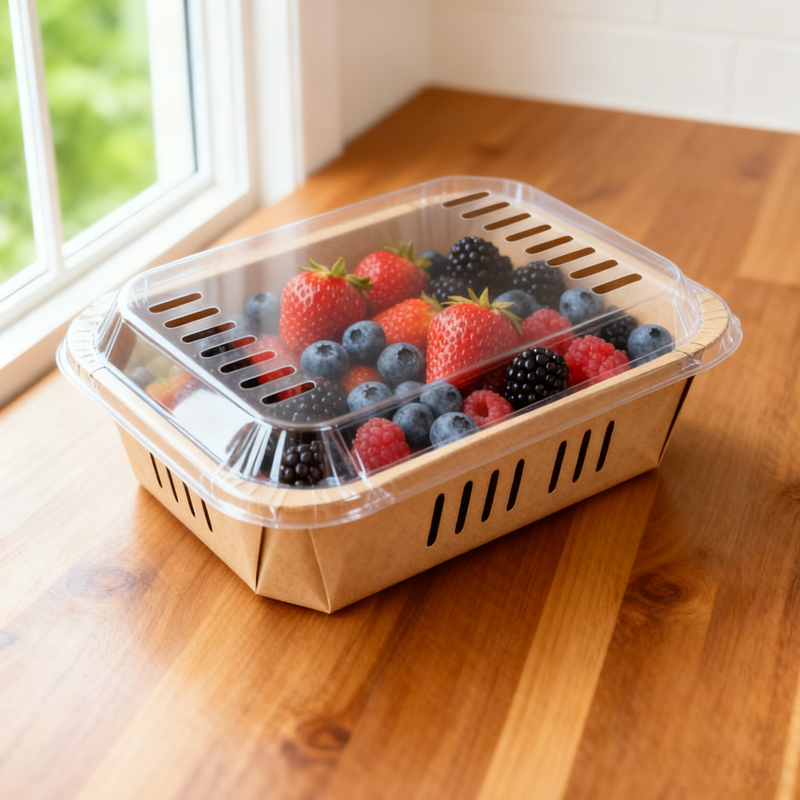
Produce does not spoil because of time. It spoils because of heat, moisture and ethylene trapped in a closed space. That is the whole engineering case for vented paper boxes: they let the air move, so the produce behaves the way it did in the field for a little longer. Everything else — display appeal, print, freight — is secondary to that one physical job.
But ventilation is not a case of more holes being better. This article covers where venting genuinely extends shelf life, where it causes shrinkage instead, and what to specify so the box does its job in a real cold chain.

Why Ventilation Works — and When It Does Not
Respiration, Heat and Ethylene
Fresh produce keeps respiring after harvest, releasing heat, water vapour and ethylene. In a sealed container the heat accumulates, moisture condenses on the fruit and the box, and ethylene builds up until ripening accelerates and mould takes hold. Perforations and cutouts break that loop by letting air exchange with the surrounding space, which is why vented paper boxes extend usable life without any refrigeration of their own.
Ethylene matters most for sensitive items. Berries, leafy greens and some stone fruit react to low concentrations of the gas, so a box that allows it to escape is doing more for shelf life than a heavier box that seals it in.
The Over-Venting Problem
Too much open area is a real failure mode. Leafy greens and herbs lose water through the same holes that let ethylene out, and an over-vented box produces wilted, limp product by the time it reaches the shelf. Vented paper boxes work best when the vent area is matched to the crop: generous for berries and citrus, more restrained for leafy items that need humidity retained.
This is why a single vent specification across a range of vented paper boxes is a mistake. The vent pattern should change with the crop, and the supplier should be able to explain why a given pattern suits a given product rather than offering one design for everything.
Cold Chain and Stacking for Vented Paper Boxes
Airflow Through the Pallet, Not Just the Box
Vented paper boxes wrapped tightly in stretch film are sealed boxes. Cold air reaches the outer layer and stops there, so the middle of the pallet stays warm while the outside looks correct. Retailers who rely on vented paper boxes for cold chain integrity need aligned vents between layers, a pallet pattern that leaves a chimney, and wrapping that does not cover the vent columns.
The same logic applies in a refrigerated display. A box placed with its vents against a shelf wall or another box may as well be solid. Merchandising instructions matter as much as the specification.
Compression and Stack Height
Venting removes material, so a vented box is weaker than the same box with solid walls unless the corrugation or the flute direction compensates. Stack height should follow a tested compression figure rather than the height of the racking, and the boxes at the bottom of a pallet deserve more attention than the ones on top.
| Produce group | Vent need | Handling note |
|---|---|---|
| Berries, cherries | High; heat and moisture build fast | Keep vents open in the pallet pattern |
| Leafy greens, herbs | Moderate; avoid excessive water loss | Pair with a liner or humidity control |
| Citrus, apples | Moderate; ethylene dispersal matters | Separate from ethylene-sensitive crops |
| Root vegetables | Low to moderate | Watch abrasion at the vent edges |
Retail Display and Sales
Visibility and Inspection
Shoppers buying fresh produce want to see what they are buying, and a vented box lets them inspect without opening anything. That matters for berries, where one mouldy fruit visible through a window stops a sale. An open, legible pack also reduces the handling that damages produce in the first place.
The kraft tone and natural texture read as freshness, which is why vented paper boxes hold their own on a display next to glossy plastic clamshells. The box frames the product instead of competing with it.
Print and Origin Story
Paper takes four-colour print, hot stamping and spot UV, and it can carry a farm name, a region, a harvest date or a QR code linking to traceability. For a retailer building a provenance story, that printed panel is the cheapest place to tell it — and it is on the shelf rather than on a poster.
Cost, Compliance and Supply
Freight, Flat-Pack and Storage
Vented paper boxes ship flat and assemble at the packing point, which removes the empty-container volume that rigid crates carry on the return leg. Lighter tare weight means more product per load, and flat packs use back-of-store space efficiently. For seasonal volume, the storage saving is often worth more than the unit price difference.
Material Claims That Hold Up
Paper is recyclable in principle, but produce boxes usually arrive wet, soiled or waxed, and many recycling systems reject them for that reason. Compostability depends on the coating and on a facility that accepts food-contaminated material. The defensible claim is narrower than "eco-friendly": specify the fibre source, avoid plastic lamination if the recycling message matters, and check the local route before printing a disposal instruction.
Where plastic restrictions apply, vented paper boxes reduce compliance exposure because they sit outside most single-use plastic rules. That is a genuine operational benefit, separate from the environmental argument.
FAQ
Which produce benefits most from vented paper boxes?
Berries, cherries, grapes and stone fruit, because they generate heat and moisture quickly and are sensitive to ethylene. Leafy greens benefit from venting too, but the vent area should be smaller so the crop does not lose water and wilt.
Can they go straight into refrigerated display?
Yes, and they help cooling because air can pass through the pack. The gain disappears if the vents are blocked by a shelf wall, an adjacent box or tight film, so the merchandising pattern matters as much as the box.
Are vented boxes strong enough for stacking?
They can be, if the corrugation and flute direction are chosen for the load and the stack height is set from a tested compression figure. Venting removes material, so a vented box should not be assumed to carry the same load as a solid-walled one.
Do they beat plastic on environmental impact?
On end of life and on regulatory exposure, usually. On total carbon, not automatically — paper production is energy-intensive and the comparison depends on fibre source, transport distance and what happens to the box after use.
Retailers prefer vented paper boxes because the format solves a physical problem: it moves heat, moisture and ethylene away from the product while keeping the pack visible and printable. Get the vent pattern, the pallet pattern and the stack height right, and the box stops being packaging and starts being shelf life.