 EN


"Biodegradable" is the least useful word in packaging, and the most used. A cup can be called biodegradable because the paper body degrades, while the polyethylene lining that holds the coffee does not — and the lining is the only part that matters to a waste facility. biodegradable paper cups are genuinely changing the beverage industry, but the change is being driven by specific material choices rather than by the adjective.
This article separates the claims, looks at what actually changed in manufacturing, and sets out the questions that separate a serious cup from a decorated one.
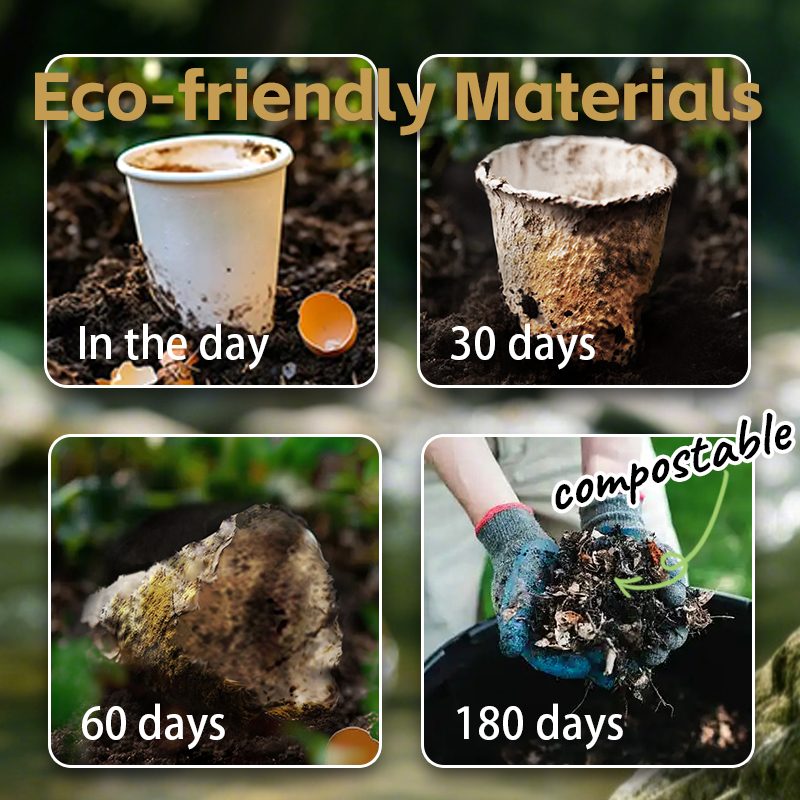
The Word Is Doing Too Much Work
Three Claims, Three Meanings
Biodegradable, compostable and recyclable describe different things, and only one of them is testable in a defined way. "Biodegradable" says the material will break down eventually, under unspecified conditions, in unspecified time. "Compostable" means it meets a standard under controlled conditions, usually industrial, within a stated period. "Recyclable" means a facility can process it back into fibre — which a food-soiled, coated cup usually cannot.
That is why a supplier can honestly print "biodegradable" on a cup that no facility will actually accept. The claim is not false; it is simply not an instruction anyone can follow.
What the Lining Decides
Almost every biodegradable paper cup that holds hot liquid carries a barrier, and the barrier sets the real environmental outcome. Polyethylene gives the strongest moisture hold and rules out composting in most systems. Water-based coatings keep the cup compatible with organic waste where a facility accepts food-soiled packaging, but hold less grease over long contact. PLA sits between the two and behaves differently again in a home heap, where it will not break down.
The lid belongs in the same conversation. A compostable cup closed with a polystyrene lid has not solved the problem, because the two components rarely travel to the same bin.
What Changed in Biodegradable Paper Cups
Coatings That Actually Perform
The real shift is that coatings on biodegradable paper cups now survive a normal hot-drink service window, which they did not a decade ago. Coverage control is the manufacturing discipline behind that: too thin leaves pinholes that appear as soft spots after twenty minutes; too thick creases at the seam and slows repulping.
That is less dramatic than a laboratory breakthrough and more useful. It means a café can specify a cup that behaves like a PE cup for the length of a commute, without giving up the option of organic waste processing where it exists.
Structure Has Improved Too
Walls of biodegradable paper cups are stiffer than they were, which matters at the rim: a well-formed curl keeps the lid engaged, and a properly glued side seam holds when hot liquid expands the board. Paper cups fail at the seam or the rim far more often than in the middle of the wall, so these are the details worth specifying.
Regulation and Market Demand
Plastic Rules and Producer Fees
Single-use plastic rules now differ by city as well as by country, so a cup specification approved in one market can fail in the next. Extended producer responsibility adds a fee that follows the material: in several markets, fibre formats carry lower liability than plastic, which makes the choice a financial one before it is an ethical one.
That is the genuine driver behind the growth of biodegradable paper cups. Not a sudden change in consumer morals, but a change in what a cup costs to place on the market.
What Buyers Ask Now
Chain buyers and corporate caterers have become specific. They ask which document covers the exact cup, which market it applies to, and what the customer can do with the cup at the end. A supplier who can answer in one email shortens the sale; one who sends a folder of logos lengthens it.
Cost and Supply
Cost per Cup, Not per Box
Piece prices for biodegradable paper cups are usually close to PE-lined cups at volume, and the gap narrows further when EPR fees and disposal costs are counted. Freight matters more than most buyers expect: cups ship nested, but carton dimensions still decide how many units fit in a container, and a taller carton can cost more across a shipment than a unit discount saves.
Print is charged per run rather than per cup, so a branded cup gets cheaper as volume rises. A single larger order with two designs is usually cheaper per unit than two small orders of the same total quantity.
Capacity and Lead Time
For biodegradable paper cups, ask for the repeat-order lead time separately from the first order, then ask what allocation looks like in your busiest week. A factory with several forming lines and a daily output measured in the hundreds of thousands of pieces can absorb a spate of orders; a small converter cannot, and the shortfall lands in the month you can least afford it.
| Claim | Verified by | Works when |
|---|---|---|
| Compostable | Certification naming the finished cup | An industrial facility accepts food waste |
| Recyclable | Coating type and local collection rules | The cup reaches the bin clean |
| Plastic-free | Liner, lid and ink declared | Every component is checked |
| Biodegradable | Standard, time frame and conditions stated | Rarely, unless it is also compostable |
FAQ
How long do biodegradable paper cups take to break down?
There is no single figure, and any supplier quoting one should also quote the standard and the conditions. What matters practically is whether the cup carries a compostability certificate for your market and whether a facility nearby accepts it.
Are biodegradable paper cups suitable for hot and cold drinks?
Yes, with the right lining and wall. Hot drinks need a barrier rated for hot fill; cold drinks need a coating that resists condensation without softening the board. One cup rarely optimises both, so check the intended use.
Do biodegradable paper cups cost more than PE-lined cups?
The difference at volume is usually modest, and it depends on the coating, the board and the print. Compare cost per cup at the same grade and print coverage, then add EPR fees if they apply.
Can they go into paper recycling?
Usually not once used, because the lining and food residue contaminate the stream. Water-based coatings repulp more easily than plastic film, but local rules decide, and the printed disposal message should match them.
Biodegradable paper cups are transforming the beverage industry because fibre formats finally perform, regulation made plastic expensive, and buyers started asking for documents instead of adjectives. The cups that will win are the ones that state their lining, their certification and their disposal route on the specification sheet.