 EN


"Eco-friendly" is not a property of paper. It is a property of a specific container, made from a specific fibre, with a specific barrier, sold into a market that has a specific way of dealing with it. Paper food containers can be genuinely low-impact, and they can be a paper box wrapped in plastic film that nobody can process. The difference is decided in the specification, not in the material name.
This article sets out where the environmental case is solid, where it depends on conditions, and which questions actually separate one supplier from another.
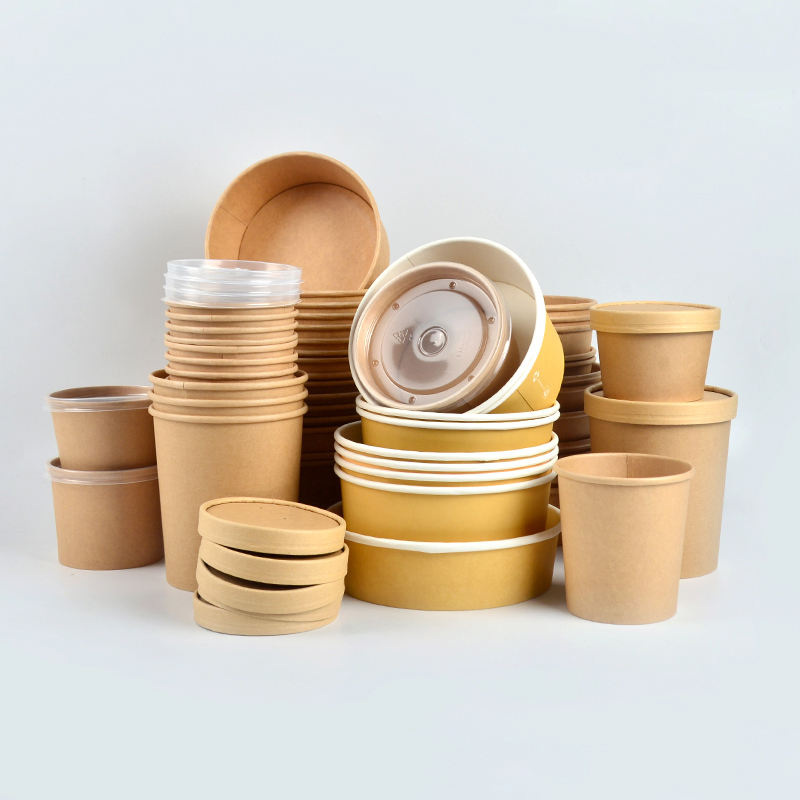
What Actually Makes Paper Food Containers Eco-Friendly
Three Fibre Routes
Paper food containers come from virgin wood pulp, recycled fibre, or agricultural residue such as bagasse and wheat straw. Virgin pulp gives the strongest sheet and the cleanest print surface; recycled fibre reduces demand for new trees but shortens the fibre and usually needs a heavier wall for the same strength; residue fibres turn a waste stream into packaging and are common in moulded formats.
None of these fibre routes is automatically the greenest choice for paper food containers. A recycled container shipped across an ocean can carry a higher transport footprint than a locally made virgin one, and a residue-based container still depends on how the fibre is processed. The useful question is which fibre, from where, with what documentation.
The Coating Decides the Claim
Almost every paper food container that holds wet or greasy food carries a barrier, and that barrier usually decides whether the environmental claim survives. Polyethylene holds liquid well and rules out composting in most systems. Water-based coatings keep the container compatible with organic waste where a facility accepts it, but hold less grease over long contact. PLA sits between the two.
This is why a printed leaf on the lid is not evidence. Buyers should ask for the certification that covers the finished container, for the market it will be sold in, rather than a certificate issued for the base board alone.
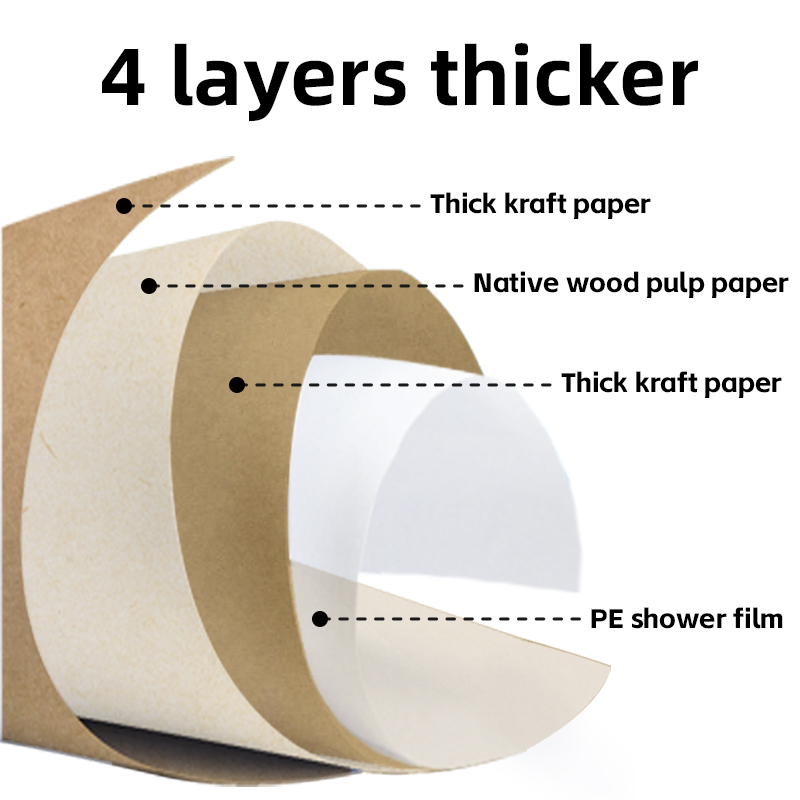
End of Life: Three Routes, Three Conditions
Composting
Paper food containers only compost where the coating allows it and where a facility accepts food-soiled packaging. Industrial composting reaches the temperatures that break down fibre quickly; a garden heap usually does not, and a plastic-lined container will not break down in either. The honest claim names both the certification and the disposal route the customer actually has.
Where that route exists, the operational benefit is real: the container goes into the same organic stream as food waste, which removes a sorting step and often a collection fee. Where it does not, the compostable container ends up in general waste and the advantage narrows to feedstock.
Recycling
Clean, dry paper food containers can usually enter a paper recycling stream. Food-soiled ones generally cannot: grease contaminates the pulp and most collectors reject them. That single fact undermines a large share of "recyclable" messaging on food packaging, because the container is almost always soiled by the time the customer is finished with it.
Water-based barriers are easier to repulp than plastic film, which is why they are increasingly specified by brands that intend to publish a recycling claim. The claim should still be checked against local collection rules rather than assumed from the material.
| Claim | Verified by | Works when |
|---|---|---|
| Compostable | Certification naming the finished product | An industrial facility accepts food waste |
| Recyclable | Coating type plus local collection rules | The container reaches the bin clean |
| Plastic-free | Liner, window, adhesive and ink declared | Every component is checked, not just the board |
| Lower carbon | A lifecycle study for that construction | Pulp, energy and transport are all in scope |
The Business Case
Compliance and Procurement
Single-use plastic rules now vary by city as well as by country, and extended producer responsibility schemes add a fee that follows the material. Paper food containers usually sit outside plastic restrictions and carry lower EPR liability, which makes them a planning decision before they are an environmental one.
Institutional and corporate buyers increasingly ask for the documentation behind a packaging choice. A supplier that can map food contact reports, quality certificates and compostability certification to the exact SKU shortens that conversation; one that sends a folder of logos lengthens it.
Brand, Cost and the Honest Claim
The brand benefit is real but smaller than most packaging pages suggest. Customers notice paper food containers because they are visible, and a clean kraft surface with a restrained print reads as a decision. They do not audit the coating, and they will not forgive a container that leaks.
On cost, the picture depends on volume and freight: moulded containers are bulky, print and tooling are charged per run, and a heavier barrier raises the unit price. Comparing landed cost per order, including remakes and disposal, is more useful than comparing quotes per thousand.
FAQ
Are paper food containers safe for all types of food?
Safe for most, provided the coating suits the dish. Hot, oily and acidic foods need a barrier rated for that use and documentation that names it. Very wet, long-held dishes generally need a different format rather than a heavier paper one.
How do they compare in cost with plastic?
Piece prices are often close at volume, and the gap narrows once EPR fees and disposal are counted. Transport can work against paper because moulded formats take more space per unit.
Can they hold hot liquids and soups?
Some can, with a heat-rated barrier and a sealed base, but paper food containers are format-dependent: one built for dry or semi-dry food is the wrong choice for broth, however good the coating.
Do they compost at home?
Uncoated or water-based coated containers may break down in an active home heap, slowly. Plastic-lined ones will not. If home composting is the claim, the coating and the certification have to support it explicitly.
Paper food containers support eco-friendly practice when three conditions line up: a fibre source that can be documented, a barrier that matches both the dish and the disposal route, and a market that can actually process the container. Remove any one and the claim weakens, whatever the lid says.