 EN

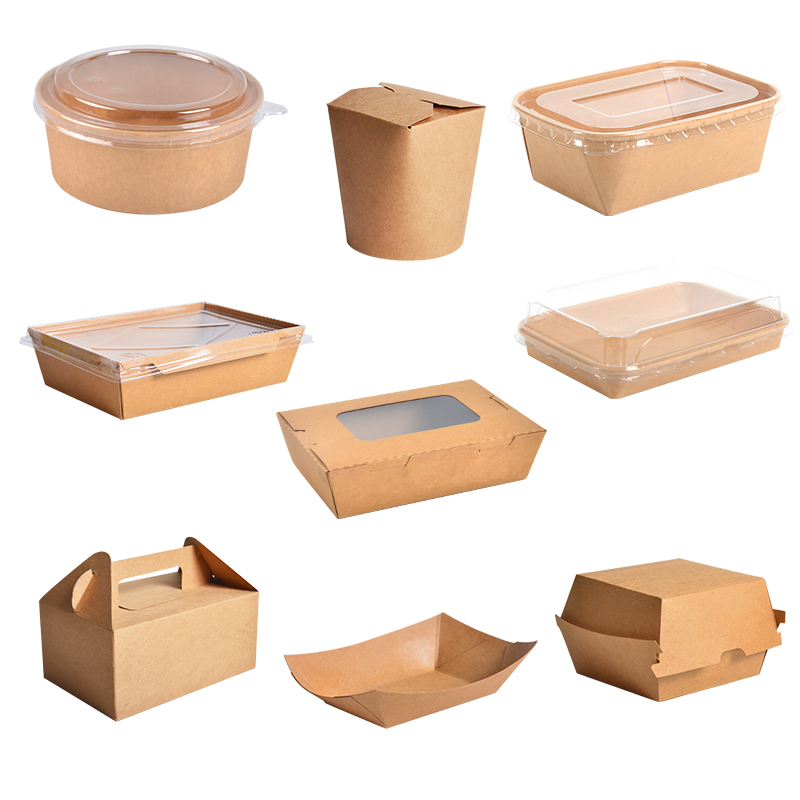
Most packaging arguments start with the design and end with a complaint about a leak. The order is backwards. A take away box has to survive stacking, steam, grease and a delivery bag before anyone notices the print — and the print only earns its money if the box arrives intact enough to be photographed.
This guide looks at how functionality and aesthetics actually interact: which decisions affect both, which trade one against the other, and where a small specification change buys more visual quality than a redesign.

Function First, Then Form
What the Box Has to Survive
Four stresses decide whether a take away box works: compression from stacking, moisture from steam and sauce, grease at the base, and handling during loading. A box that fails any one of them creates a remake, and a remake costs more than the difference between a good box and a cheap one.
The delivery leg is where most failures appear, because the box spends time tilted, stacked and unvented. A take away box that performs on the pass but softens in a bag has not been tested under the conditions that matter.
Three Checks Before Discussing Design
Fill the box with the real dish at service temperature and close it. Stack three loaded boxes and leave them for the length of the longest delivery. Then open the bottom one and look at the base. If the base is dry, the wall is straight and the lid still seats, the structure is settled and the artwork conversation can begin.
Skipping that sequence is why so many branded boxes look better than they perform. Print cannot rescue a take away box whose wall buckles, and it draws attention to a leak rather than away from it.
Materials That Carry Both
Board, Flute and Coating
For a take away box, the substrate sets the ceiling on both stiffness and print quality. A heavier board holds a crisper crease and a flatter print surface, while a light sheet flexes and shows every fold line through the artwork. Fluted board adds stiffness for larger formats but prints with visible ribbing unless a liner is used.
Coating decides the finish and the barrier. Matte lamination gives a premium, low-glare surface that photographs well and resists scuffing in a bag; water-based coatings keep the box compatible with organic waste but offer less grease hold; a grease-resistant liner is what stops the base going translucent under a hot, oily meal. Choosing the finish is therefore also choosing the disposal story.
Sustainability Without Losing Performance
Recycled and certified fibre now performs close to virgin stock in most takeaway formats, and moulded fibre handles heat and grease without a plastic film. The remaining gap is moisture over time: a very wet dish still needs a barrier, and a barrier usually decides whether the take away box can be composted at all.
That trade-off is worth stating plainly on the packaging. A box that claims compostability while carrying a plastic liner creates a compliance problem for the operator, which is a worse outcome than a modest, accurate claim.
Structure
Compartments and Menu Fit
Compartments do two jobs: they stop sauce migrating into fried items, and they make a portion look composed. The second effect is why compartmented formats often feel more premium even when the fill weight is unchanged.
Depth should follow the dish. A deep well suits a bulky protein or a saucy item; a shallow, wide format suits flatbreads, salads and pastries. A compartment that is too deep for its contents makes the portion look small, which is the opposite of what the box was bought to do.
Closures, Stacking and the Dieline
The closure is the most-touched part of a take away box and the most common failure point. Tuck flaps are quick to assemble and cheap; lock tabs hold better under load; a friction-fit lid gives the cleanest presentation but demands tolerance control. For hot, wet food, the closure has to survive a tilted bag, not just a counter handover.
Stacking height for a take away box should come from a tested compression figure rather than from how the box looks on a shelf, and the dieline should be checked against the filling line: a box that is a couple of millimetres too wide does not nest in the warmer, does not fit the bag, and does not stack in the van.
Print and Customisation
Dieline, Curvature and Colour
Artwork approved flat rarely survives the fold. Corners compress the image, glue seams cut through the layout, and a logo placed on a panel that folds inward disappears when the box is closed. Always proof on the structural template, then on a made-up sample.
Colour behaves differently on coated and uncoated board, and on kraft the substrate tone shifts everything warmer. A physical proof on the actual material is the only reliable check; screen proofs flatter artwork that will print duller.
Modular Sizing
Custom sizing for a take away box looks expensive until it is compared with the cost of over-sized formats, filler material and damaged orders. The practical compromise is a small modular family: two or three footprints that cover the menu, with print carrying the differentiation between products.
That approach keeps tooling limited, storage predictable and branding consistent, while still letting a take away box look purpose-built for the dish inside it.
| Decision | Functional gain | Aesthetic gain |
|---|---|---|
| Heavier board | Stiffer wall, cleaner stack | Flatter print, sharper crease |
| Grease-resistant liner | No translucent base | Colour stays true after filling |
| Lock-tab closure | Survives a tilted bag | Flush lid, no tape |
| Matte lamination | Scuff resistance in transit | Low glare, better photos |
FAQ
What makes a take away box both functional and attractive?
A board stiff enough for the load, a barrier matched to the dish, a closure that survives delivery, and print proofed on the actual material. When the first three are right, the fourth is what customers remember.
How should a business choose the material?
Start from the food: moisture, grease, weight and holding time. Then add the disposal route the customer has. Board grade and coating follow from those answers, not from a preference for kraft or gloss.
Is custom printing worth it for smaller operators?
Usually yes, at the right run size. Setup is charged once per run, so a single larger order with two designs is cheaper per box than two small orders, and digital print makes a short first run possible.
Does compartmentalisation affect food quality?
It does, mainly by stopping wet and crisp components from mixing. It also protects presentation, which is why compartmented formats read as more premium even at the same fill weight.
Balancing a take away box is not a compromise between looks and performance. The same decisions — board, barrier, closure, proof — improve both, and a box that fails on function rarely looks good for long anyway.