 EN

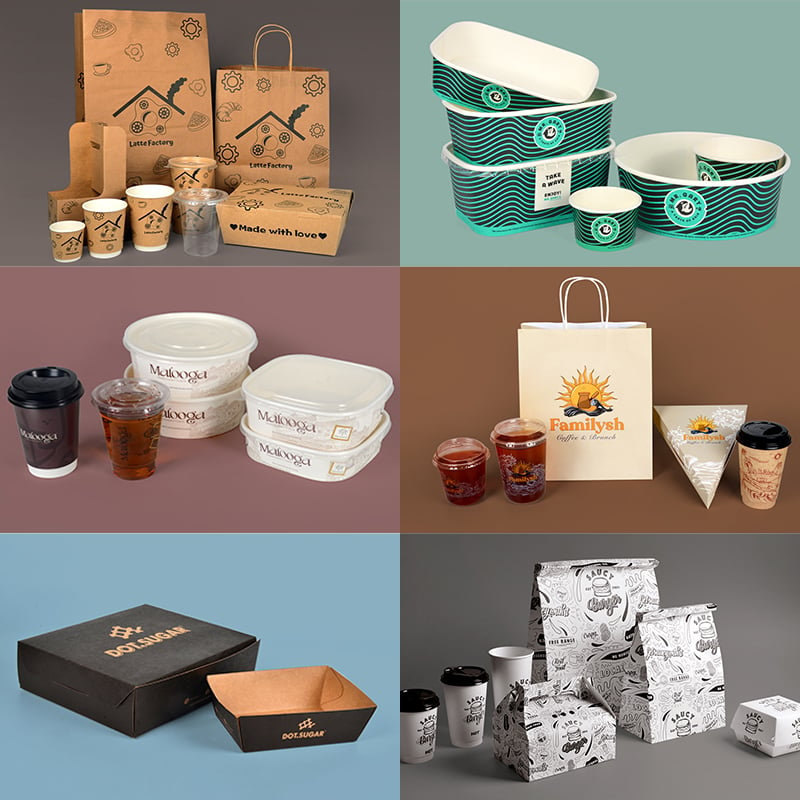
Restaurants tend to buy packaging the way they buy napkins: on price, at the last minute, from whoever answers fastest. Then a curry leaks across a delivery bag and the cost of that decision becomes visible. Choosing take away boxes is a short list of engineering decisions with a long list of consequences, and the order in which you settle them matters.
This guide sets priorities by operational impact rather than by popularity: containment, material fit, portion and cost, honest sustainability, and the supplier behaviour that decides whether any of it holds up in a busy month.
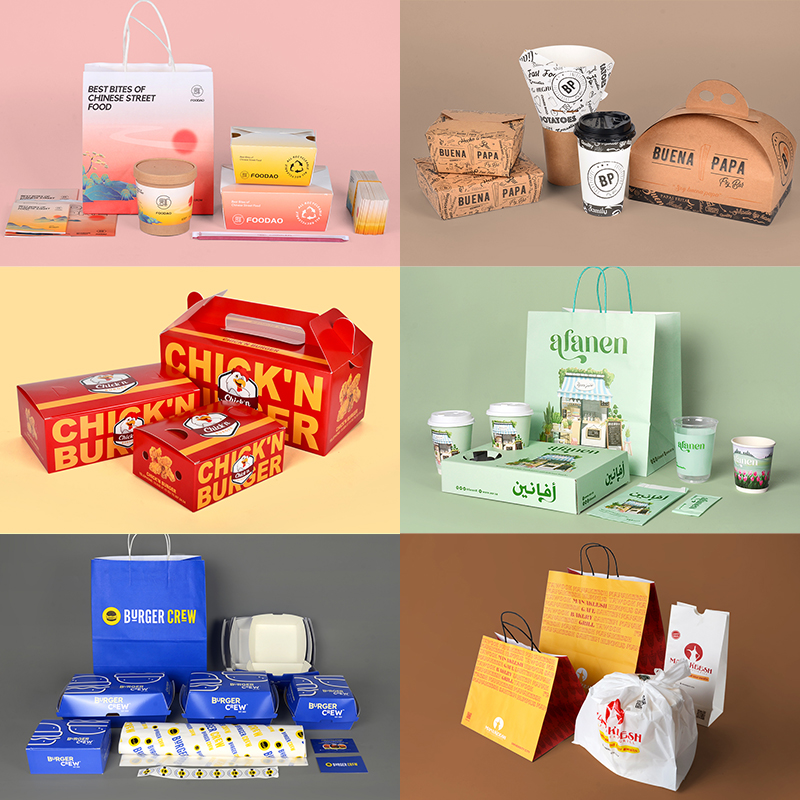
Safety and Containment Come First
Food Contact Is Not Optional
Every box that touches hot, oily or acidic food needs documentation for that use. The failure mode is not dramatic: a coating that was never intended for heat softens, an ink migrates, and the operator carries the liability. Ask for a food contact report that names the board, the coating and the ink, and check that it covers hot fill if that is how the box will be used.
Physical containment matters just as much. A take away box that deforms under a heavy portion, or whose lid releases when the bag tilts, produces a refund and a review that no amount of recipe work can offset.
Match the Closure to the Menu
Closures are not interchangeable. A tuck-in flap suits a dry, light item; a lock tab holds under load; a hinged lid with a vent suits fried food that needs to breathe; heat-sealed film is the only reliable answer for liquid. Take away boxes ordered for the whole menu usually end up failing on the wettest dish, so the closure should be chosen per menu section rather than once for the restaurant.
Match Take Away Boxes to the Dish
Paper, Bagasse, Plastic, Foil
Paperboard is cheap, printable and fine for dry or lightly sauced food, but it needs a barrier for anything greasy. Moulded fibre — bagasse or similar — holds heat and grease better and carries a stronger sustainability story, at a higher unit price and with more freight volume. Plastic gives transparency and liquid security but invites regulatory risk. Foil conducts heat, suits oven finishing and is widely recycled, though it is not microwave-safe.
For take away boxes, the practical approach is to let the menu assign the material: fried and grilled items to vented fibre, saucy items to a lined or sealed format, cold items to a coated board that will not sweat through. One material for everything is a compromise that shows up as a specific complaint.
Venting, Condensate and Texture
Steam is the most underrated packaging problem in takeaway. A sealed box traps moisture, and fried food loses its crust within minutes. Vents or a controlled lid gap solve it, and a raised base keeps the food out of the liquid that collects at the bottom. For take away boxes used on anything crisp, venting is worth more than an extra layer of board.
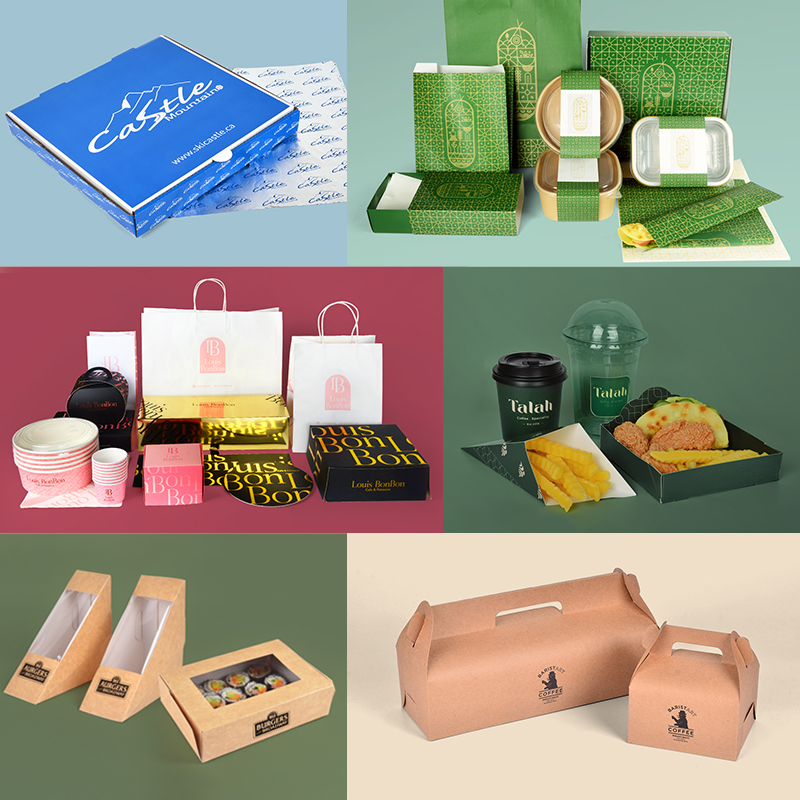
Portion, Compartments and Cost
Right-Sizing and Perceived Value
Take away boxes decide portion perception as much as the kitchen does. The same weight of food looks generous in a box it fills and mean in one with space around it. Mapping each dish to a container size, rather than defaulting to two formats for the whole menu, fixes a complaint that costs nothing to solve.
Compartments do the same work for multi-component meals: they stop sauce migrating and they make the plate look composed. Two or three sections cover most menus, and a modular family keeps the SKU count manageable while still letting each dish look purpose-built.
Cost per Order, Not per Box
The cheapest take away boxes are rarely the cheapest order. Add the remakes, the refunds, the staff time spent taping lids and the freight on a bulky format, and the ranking often reverses. Take away boxes should be compared on landed cost per order with the failure rate included, not on the unit price in a quotation.
| Menu type | Usual format | What to watch |
|---|---|---|
| Fried, grilled | Vented fibre or kraft box | Steam without venting; grease at the base |
| Curry, stew | Sealed or lined container | Edge wicking; lid release when tilted |
| Salad, cold sides | Coated board or rPET | Condensation softening the board |
| Catering trays | Foil or heavy fibre | Stack load; foil is not microwave-safe |
Sustainability That Survives Scrutiny
Claims, Coating and Local Infrastructure
Biodegradable, compostable and recyclable are three different claims, and none of them means anything without a destination. A compostable box only diverts waste where an industrial facility accepts food-soiled packaging; a plastic-lined box is not compostable at all; greasy paper usually fails recycling. The defensible position is to state what the box is made of, what the customer should do with it, and what is actually available locally.
That honesty is also commercial. Corporate clients and delivery platforms increasingly ask for evidence, and a supplier who can map certification to the SKU makes that answer easy. Take away boxes bought on an unverified claim transfer the risk to the restaurant that prints it.
Supplier and Trial
Lead Time, MOQ and the Test That Matters
Ask for the repeat-order lead time separately from the first order, then ask what allocation looks like in your busiest week. A factory with automated forming and a daily output in the hundreds of thousands of pieces can absorb a seasonal spike; a small converter cannot, and the shortage arrives when you can least afford it.
Then trial take away boxes properly. Run one menu section on the new format for a fortnight, including the longest delivery in your zone, and ask the kitchen staff what slowed them down. Their feedback on stacking, closure and warmer fit is more useful than any sample reviewed in an office.
FAQ
What material is best for hot food?
Moulded fibre, lined board or a heat-rated plastic all work; foil is excellent for oven finishing but not for microwaves. The deciding factor is the dish: dry and fried needs venting, saucy needs a seal, and liquid needs a closure designed for liquid.
How can a restaurant reduce packaging cost without losing quality?
Standardise on a small modular family, commit to volume so setup is amortised, and compare landed cost per order. Cutting the SKU count usually saves more than shaving the unit price.
Do take away boxes need to be microwave-safe?
Only if customers are likely to reheat. For office lunches and family portions, microwave compatibility adds real value; for immediate consumption it adds cost. Whatever the answer, print it clearly on the box.
How important is branding for a small restaurant?
More than most owners assume. A sticker or a one-colour print still makes the box identifiable, and for delivery-heavy businesses the packaging is the only physical brand surface the customer keeps.
Priorities for take away boxes are unglamorous: containment first, material second, portion and cost third, then a sustainability claim that can be defended. Restaurants that settle them in that order spend less time apologising for packaging.