 EN

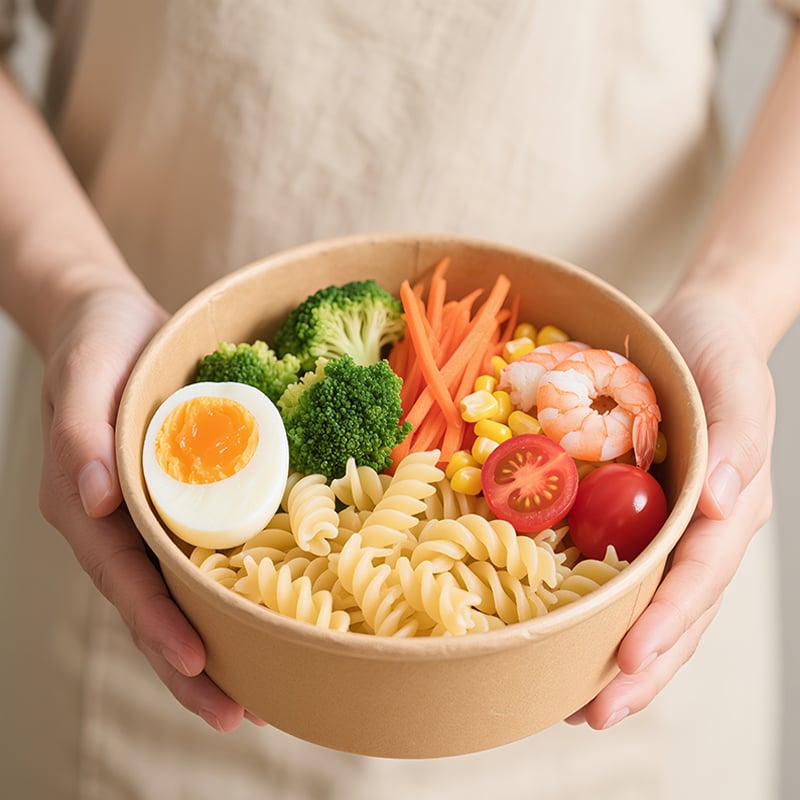
A bowl is the hardest format in disposable food packaging. It has to hold liquid at the base, tolerate heat at the wall, survive being stacked and carried, and still look presentable when it reaches the customer. Eco-friendly paper bowls only became a serious commercial option once forming and coating caught up with those four demands at the same time.
This article separates what is genuinely structural from what is marketing: the material routes, the coating decision, the failure points, and the cost and compliance questions a buyer should settle before ordering.
What "Eco-Friendly" Actually Means on a Bowl
Two Material Routes
Most eco-friendly paper bowls come from one of two processes. Folded paperboard bowls are cut, shaped and glued from a coated sheet; moulded pulp bowls are pressed from fibre slurry into a single piece. The first gives sharper print and a lighter wall, the second gives a seamless base and a more rigid feel. Neither is inherently greener, and both can be made from virgin or recycled fibre.
Moulded formats often use bagasse, the fibre left after sugarcane is crushed, which turns an agricultural residue into a raw material. Paperboard formats are more likely to use certified wood pulp. The sustainability question is therefore not "paper or bagasse" but which fibre, from which source, with which documentation.
The Coating Decides the Claim
A paper bowl without a barrier fails in minutes. The barrier is usually polyethylene, a water-based coating, or a PLA film, and that single choice determines both performance and the disposal story. Polyethylene holds liquid well and rules out composting in most systems. Water-based coatings keep the bowl compatible with organic waste where the facility accepts it. PLA sits between the two on heat and grease.
This is where most claims about eco-friendly paper bowls are won or lost. A bowl printed as compostable but lined with plastic is a compliance risk, not a selling point. Buyers should ask for the certification that covers the finished construction, not the certificate for the base board.
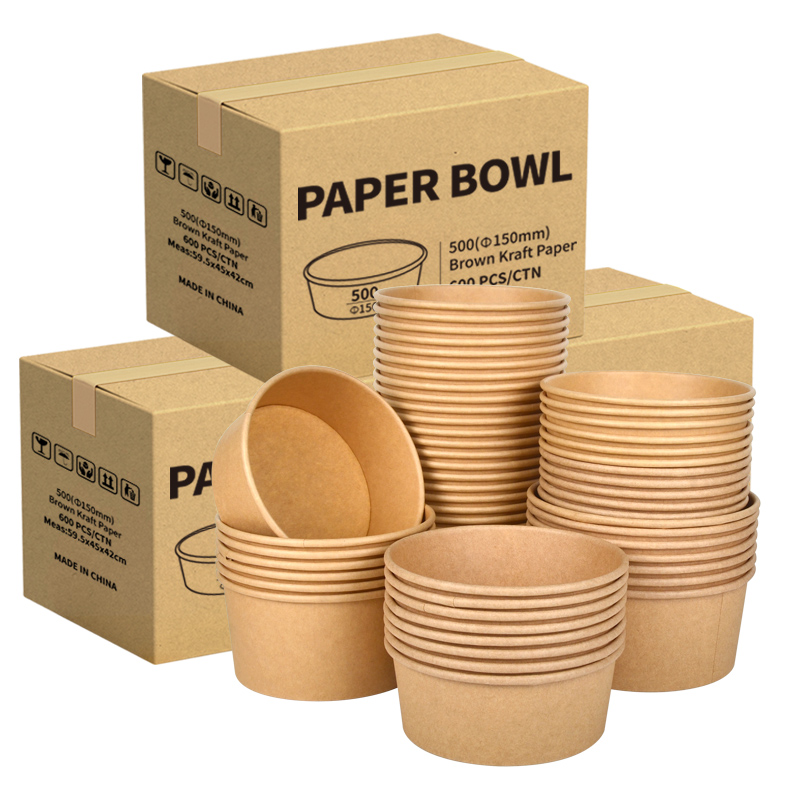
Performance That Eco-Friendly Paper Bowls Must Deliver
Heat, Grease and Leaks
Soups, stews and saucy noodles stress a bowl in a way a dry snack never does. Heat softens the wall, oil attacks the coating at the cut edge, and a base that is not fully sealed wicks liquid until the bottom gives way. Eco-friendly paper bowls specified for hot, wet food need a heavier board, a barrier on the food-contact face and a base seam that is pressed rather than folded.
Lidding is the second half of the problem. A lid that snaps on properly keeps heat in and stops the bowl flexing under a stack; a loose lid turns a delivery into a complaint. Eco-friendly paper bowls should be tested with their own lid, not with a generic one, because a small difference in rim diameter is enough to break the seal.
Structure, Rim and Nesting
Geometry decides whether eco-friendly paper bowls feel solid. A rolled rim resists deformation, a tapered wall lets bowls nest and de-nest without jamming, and ribs or a stepped base spread load away from the centre. Thickening the wall is the expensive way to add strength; changing the profile is usually the cheaper one.
Nesting matters more than it sounds. Bowls that jam in the sleeve slow service at peak, and bowls that nest too loosely take up unnecessary carton volume, which is paid for in freight rather than in the piece price.
| Failure at the customer | Usual cause | What to specify |
|---|---|---|
| Soft base under soup | Light board, weak base seam | Heavier board, pressed base, tested fill level |
| Oil marks through the wall | Thin barrier, uncoated cut edge | Grease-resistant liner, rolled rim |
| Lid pops off in transit | Rim diameter mismatch | Bowl and lid approved as one system |
| Bowls jam in the sleeve | Taper or rim profile out of tolerance | Stated nesting force and dimensional tolerance |
Cost and Operations for Eco-Friendly Paper Bowls
Landed Cost, Not Piece Price
Eco-friendly paper bowls usually sit close to plastic on piece price at volume, and the differences move to freight and storage. Bowls are bulky: carton dimensions decide how many units fit in a container, and a taller carton can cost more across a shipment than a discount on the unit price saves. Flat, well-nested packing is worth as much as a lower quote.
Print is a fixed cost per run rather than per unit, so the branded bowl gets cheaper as volume rises. For a chain running several outlets, the same structure printed differently per market is usually cheaper than maintaining separate moulds.
Supply and Lead Time
Capacity is the quiet risk with eco-friendly paper bowls. A supplier running a dozen bowl moulding machines with more than fifty moulds in circulation can absorb seasonal peaks; a small converter cannot, and the shortfall lands in your busiest month. Ask for the lead time on a repeat order separately from the first one, because the repeat is the order that has to be routine.
Compliance and Procurement
Certificates That Carry Weight
Food contact documentation comes first, and it should name the board, the barrier and the ink. Quality systems such as ISO 9001 or BRC support consistency. Compostability certification is only meaningful when it covers the finished bowl and is recognised in the destination market — a certificate issued for a material does not automatically cover a coated finished product.
For eco-friendly paper bowls, ask for the scope and the expiry date, not the badge. A supplier that can map each document to the SKU being shipped is far easier to audit than one that sends a folder of logos.
A Short Buyer Checklist
Confirm the intended fill, temperature and holding time; the barrier type and whether it is on one face or both; the bowl-and-lid pairing; the carton cube and units per carton; and the disposal route the customer will actually have. Then test a filled bowl at service temperature before approving the run.
FAQ
Are eco-friendly paper bowls suitable for soup and stew?
Yes, when they are specified for hot, wet food: heavier board, a barrier on the food-contact face, a pressed base and a matching lid. The test is a filled bowl held at service temperature for the delivery window, not a dry sample inspection.
How do they compare in cost with plastic or foam?
Piece prices are often close at volume. Paper usually wins on storage and can win on disposal, while plastic can win on long holding and heavy liquid loads. Compare landed cost per order with the failure rate included.
Which certifications should a buyer request?
A food contact report covering the exact construction, a quality management certificate such as ISO 9001 or BRC, and — where a compostability claim will be printed — certification that names the finished product and applies in that market.
Can these bowls be recycled or composted in normal waste systems?
Usually not in standard recycling, because food residue and barrier coatings contaminate the paper stream. Composting depends on the coating and on a facility that accepts food-soiled packaging. Check the local route before printing a disposal message.
Eco-friendly paper bowls are ideal for food packaging businesses for a boring reason: the format finally performs. Once the board, barrier and lid are specified together, the environmental story becomes a bonus rather than a compromise.