 EN

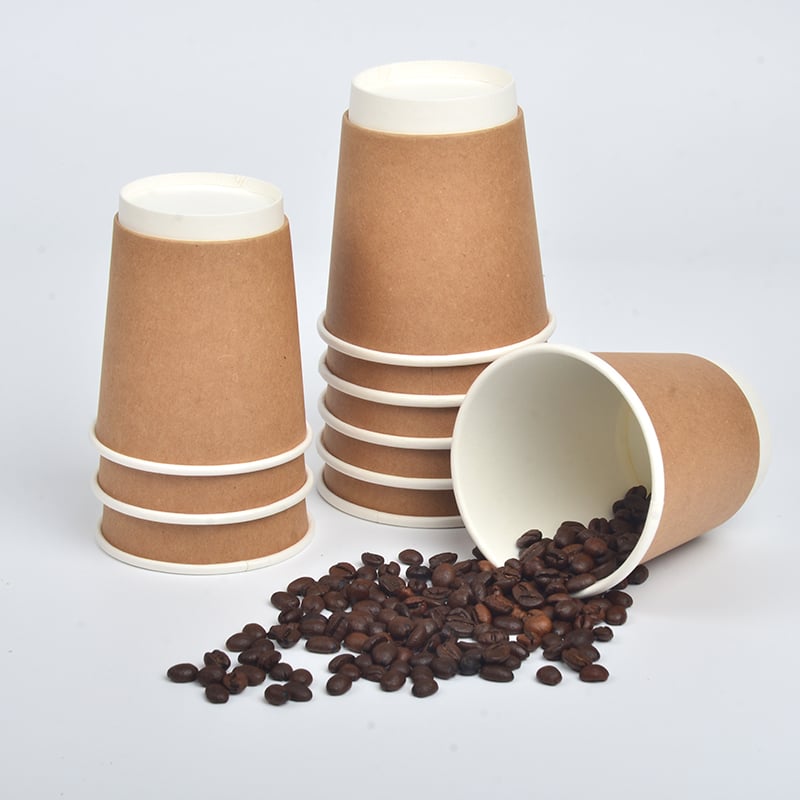
A coffee cup is used for fifteen minutes and then becomes a waste problem someone else has to solve. That asymmetry is what made paper coffee cups the default for cafés that want to look responsible — and it is also why so many of those cups still end up in general waste, because the lining, not the paper, decides what happens next.
This article separates the environmental case that holds up from the one that does not, and sets out what a buyer should check before printing a sustainability claim on the sleeve.
The Environmental Case, Stated Honestly
Where Paper Genuinely Wins
The fibre in paper coffee cups comes from a renewable feedstock, and with chain-of-custody certification the buyer can show where it came from. That is a real advantage over polystyrene and over the plastic sleeves and lids that usually travel with a cup. Paper also repulps where facilities accept coated stock, and it degrades far faster than foamed plastic in any environment.
The second genuine advantage is weight and print. Paper coffee cups ship nested and flat-packed by the thousand, which keeps freight low, and the surface takes four-colour print, hot stamping and spot UV — so the cup can carry the brand without a separate label.
Where the Claim Breaks
Most paper coffee cups are lined with polyethylene so they can hold hot liquid for twenty minutes. That lining is the reason a cup that looks recyclable often is not: the plastic film has to be separated from the fibre, and many collection systems will not take a food-soiled coated cup in the first place.
So the honest position is narrower than the marketing. A paper cup is a lower-impact choice than foam when the fibre is certified and the lining is compatible with the disposal route the customer actually has; without the second condition, the cup is a renewable container that still goes to landfill.
What Buyers of Paper Coffee Cups Actually Check
Fibre Certification
Certification is only useful if it names the material and the mill. A chain-of-custody certificate for the board, plus a recycled-content declaration if that is the claim, is what a corporate buyer's sustainability team will ask for. A logo on a website is not documentation.
Recycled fibre reduces demand for new pulp but shortens the fibre, so a recycled cup usually needs a heavier wall for the same stiffness. That trade-off shows up as a slightly different hand-feel, which customers notice even if they cannot name it.
The Lining and the Lid
The lining is the single most consequential specification on paper coffee cups. Polyethylene gives the strongest moisture barrier and rules out composting in most systems. Aqueous coatings keep the cup compatible with organic waste where a facility accepts food-soiled packaging but hold less well over long contact. PLA sits between the two, and behaves differently again in a home heap, where it will not break down.
The lid deserves the same scrutiny, because a compostable cup with a polystyrene lid has not solved anything. Fibre lids, moulded pulp lids and PP lids each change the disposal story, and the lid is often the part that ends up in the wrong bin.
Function: Heat, Handling and Leak
Single Wall, Double Wall or Sleeve
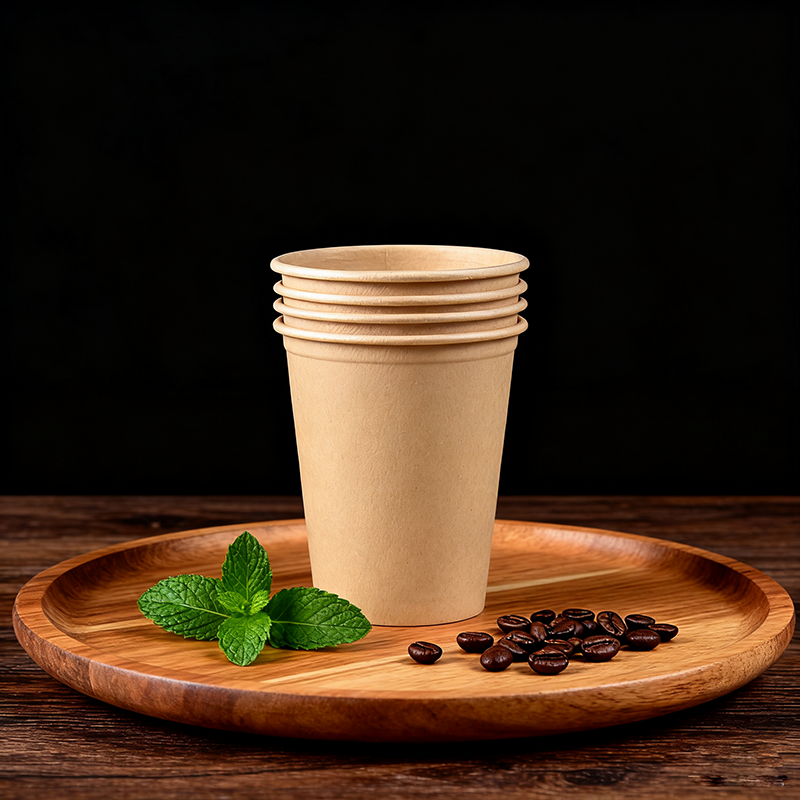
Single-wall paper coffee cups are the cheapest and print best, but they conduct heat, so a sleeve is effectively part of the product. Double-wall cups hold temperature longer and remove the sleeve, at a higher unit cost and more carton volume. For a café selling mostly quick takeaways, single wall plus a printed sleeve is often the better economic answer; for longer holds, double wall wins.
Rim, Seam and Lid Fit
Paper coffee cups fail at the seam or the rim, rarely in the middle of the wall. A well-rolled rim keeps the lid engaged and stops the top edge deforming when the lid is pressed on; a side seam that is properly glued holds against hot liquid expanding the board. Paper coffee cups should be approved with their own lid, because a rim diameter that differs by a fraction is enough to produce a lid that pops off in a bag.
Then test the way it will be used: fill with a hot drink, cap it, tilt it, and leave it for the length of a commute. A cup that passes on the counter has not been tested at all.
| Component | Common choice | Effect on disposal |
|---|---|---|
| Cup lining | PE, aqueous, PLA | Decides whether composting is possible at all |
| Lid | PS, PP, moulded fibre | Fibre lids keep the cup in one waste stream |
| Sleeve | Paper, corrugated | Can be printed instead of the cup |
| Ink | Water-based, food-safe | Easier to repulp than solvent inks |
Brand, Corporate Demand and Disposal
ESG and Procurement Reality
Corporate buyers now ask for evidence rather than intent. A supplier that can map a food contact report, a fibre certificate and a compostability certificate to the exact cup is easy to put in a sustainability report; one that sends a brochure is not. That documentation is increasingly the difference between winning a head-office contract and losing it on a technicality.
The Disposal Half of the Equation
The cup only delivers on its claim if the customer can act on it. Three clearly labelled bins, a lid that matches the cup's stream, and a sign at the counter do more than a compostable specification with no collection route. Where industrial composting is unavailable, the practical answer is thinner coatings and higher recycled content, so the cup has a better chance in a paper stream.
For eco-conscious consumers, the credibility of paper coffee cups depends on that honesty. They will forgive a cup that is not compostable; they will not forgive a cup that claims to be and cannot be processed where they live.
FAQ
Are paper coffee cups better than reusable cups?
Per use, a reusable cup wins if it is used often enough to repay its production footprint and washing. Paper coffee cups suit high-volume, on-the-go service where returns are impractical, and the comparison should include the lid and sleeve, not just the cup.
What makes a paper coffee cup compostable?
The lining, not the paper. A cup is compostable when the coating breaks down under the conditions the certification names, usually industrial. A PE-lined cup is not, and neither is a compostable cup joined to a plastic lid.
Can they be recycled without composting?
Sometimes. Coated cups need a facility that can separate the film, and food residue usually disqualifies them from standard paper collection. Check the local rule before printing "recyclable" on the cup.
Do they support a brand's sustainability messaging?
Yes, when the claim matches the specification and the local infrastructure. A certified fibre source, a lining that suits the available waste route and a clearly labelled bin are a defensible story; a green leaf alone is not.
Paper coffee cups are essential to eco-conscious consumers for a practical reason: they move the daily ritual off fossil feedstock and onto a renewable one. Whether that becomes a real environmental gain depends on two specifications the customer never sees — the lining and the lid.