 EN


Most cups described as eco-friendly differ from ordinary cups in one component: the lining. That is also the component buyers ask about last. A high-quality eco-friendly paper cup is therefore a specific combination — certified fibre, a board heavy enough for the fill, a coating that matches the disposal route, and a seam that survives hot liquid — rather than a cup with a leaf printed on it.
This article sets out the features worth checking, in the order they affect whether the cup works.
1. Fibre and Board in an Eco-Friendly Paper Cup
Certification and Recycled Content
The first verifiable feature is chain of custody. An eco-friendly paper cup should come with a certificate that names the board and the mill, plus a recycled-content declaration if recycled fibre is part of the claim. Recycled content reduces demand for new pulp but shortens the fibre, so a recycled cup usually needs a slightly heavier wall to match the stiffness of a virgin one.
Bleaching matters too, but less than suppliers suggest. Elemental-chlorine-free pulp is now standard in most food-grade board; the question worth asking is what the mill actually declares, not whether the marketing mentions "chlorine-free".
Board Grade and Stiffness
Stiffness decides whether an eco-friendly paper cup feels solid in the hand and whether it survives a lid being pressed on. It comes from board weight and fibre quality together, and it is the feature customers judge before they taste anything. A cup that flexes when gripped reads as cheap regardless of its certification.
Ask for the board grade and the finished cup weight rather than a vague "premium quality" claim. Those two numbers let you compare quotes honestly, which a logo cannot.
2. The Lining of an Eco-Friendly Paper Cup
Coating Type and Coverage
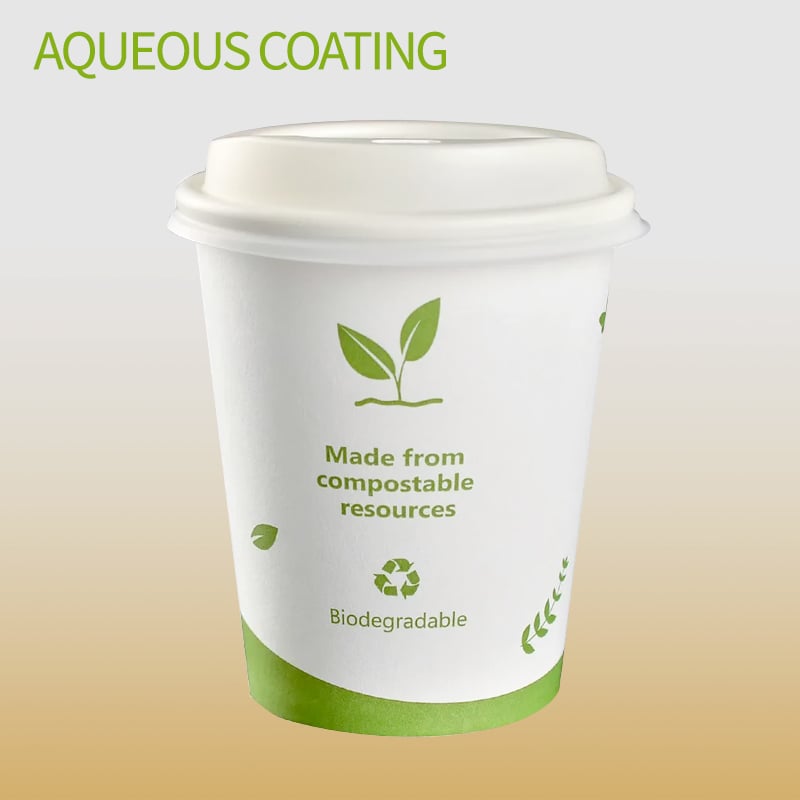
The lining is what makes an eco-friendly paper cup either a genuinely lower-impact product or a paper cup that still goes to landfill. Polyethylene gives the strongest moisture barrier and rules out composting in most systems. Water-based coatings keep the cup compatible with organic waste where a facility accepts food-soiled packaging, but hold less well over long contact. PLA sits between the two and behaves differently again at home, where it will not break down.
Coverage is the second half of the question. A coating applied too thinly leaves pinholes that appear as soft spots after twenty minutes; applied too heavily it creases at the seam and slows repulping. Consistent, controlled coverage is a manufacturing discipline, and it is one of the clearest differences between a competent converter and a cheap one.
Seam and Bottom Bonding
Most leaks start at the side seam or the bottom disc, not in the middle of the wall. A properly glued seam holds when hot liquid expands the board; a folded tab relying on pressure does not. The bottom should be pressed with a consistent ring of adhesive, because a partial bond is invisible until the cup is filled.
3. Performance Tests That Matter
Heat, Leak and Taste
An eco-friendly paper cup should hold its shape and its barrier through the actual holding time, not a lab minute. Fill it with the real drink at service temperature, cap it, and leave it for the length of a commute; then check the seam, the base and the lid. A cup that passes dry has not been tested.
Taste and odour are part of eco-friendly paper cup quality too. Board and coating should be neutral, and a cup that smells of adhesive will be noticed in black coffee, where there is nothing to mask it.
Rim Curl, Lid Fit and Stacking
The rim is the interface with the lid and with the customer's mouth. A well-formed curl keeps the lid engaged and stops the top edge deforming under pressure. Approve the eco-friendly paper cup with its own lid: a rim diameter that differs by a fraction is enough to produce a lid that pops off in a bag.
Stacking behaviour matters in a café with limited counter space. Cups should nest and de-nest cleanly without jamming, and cartons should survive a delivery without creasing the rims.
Print and Food Contact
Inks sit on the outside, but they still need to be declared. Water-based, food-safe inks are easier to repulp and less likely to taint; on an uncoated external surface, print also scuffs more easily, which is worth testing with a wet hand.
4. End of Life and Documentation
Certification Scope
Compostability certification must name the finished cup, not the base board, and must apply in the market where it will be sold. Standards such as EN 13432 or ASTM D6868 are commonly cited for coated paper food packaging; the useful check is whether the certificate lists the product you are buying and remains valid.
What Breaks the Claim
Two details quietly disqualify an otherwise good eco-friendly paper cup: a plastic lid, and a coating that no local facility accepts. Neither shows up in a brochure. Both decide whether the cup can actually be processed, which is the only version of the sustainability claim a corporate buyer will accept in an audit.
| Feature | Why it matters | How to verify |
|---|---|---|
| Fibre certification | Supports the sourcing claim | Certificate naming board and mill |
| Board grade | Stiffness and lid stability | Stated grade and cup weight |
| Lining type | Decides whether composting is possible | Coating declaration plus test result |
| Seam and base | Prevents the most common leak | Fill, cap, tilt, hold |
| Certification scope | Makes the printed claim defensible | Finished product named, market valid |
FAQ
How do buyers verify environmental claims on these cups?
Ask for the fibre certificate, the coating declaration and a compostability certificate naming the finished product. Then check the local waste route. Claims that cannot be matched to a document and a facility are marketing, not specification.
Is a water-based coating as good as plastic?
For normal hot-drink holding times, close. Plastic still holds a slight edge in very long contact and in high-fat drinks, and water-based coatings trade some of that for compatibility with organic waste and easier repulping.
Do these cups cost much more?
The gap depends on the coating, the board and the print, and it narrows at volume. Compare cost per cup at the same grade and the same print coverage; quotes built on different specifications are not comparable.
What infrastructure is needed for the environmental benefit to happen?
An industrial composting facility that accepts food-soiled packaging, or a paper stream that accepts coated stock. Without either, the cup performs as a renewable container and nothing more.
A high-quality eco-friendly paper cup is defined by four things: certified fibre, board that holds its shape, a lining that matches its disposal route, and a seam that does not leak. Everything else — the print, the lid colour, the leaf on the sleeve — is decoration on top of those four.