 EN


Home > News > Industry News
A consumer forms an impression of a brand from the moment the packaging is handed over. The outer pack does not only carry the product; it also conveys brand quality and the first impression.
As shoppers grow tired of the standard rectangular folded paper bag, a new class of creative paper packaging is rising quickly: bags with built-in cup holders, playful irregular shapes and multi-layer compartments. These structures dissolve the old boundary between "bag" and "box" — they combine a one-piece, high-load carrying handle with practical functions such as accurately locating cups, separating meal boxes and ventilating the contents.
This article looks at six representative innovative structures and sets out how creative paper packaging works in four core commercial scenarios.
In freshly baked bakery, dessert and premium light-food retail, freshness, shape integrity and visual appetite appeal directly shape customer satisfaction and the willingness to buy again.
1. Matching the product silhouette, creating a distinctive visual memory
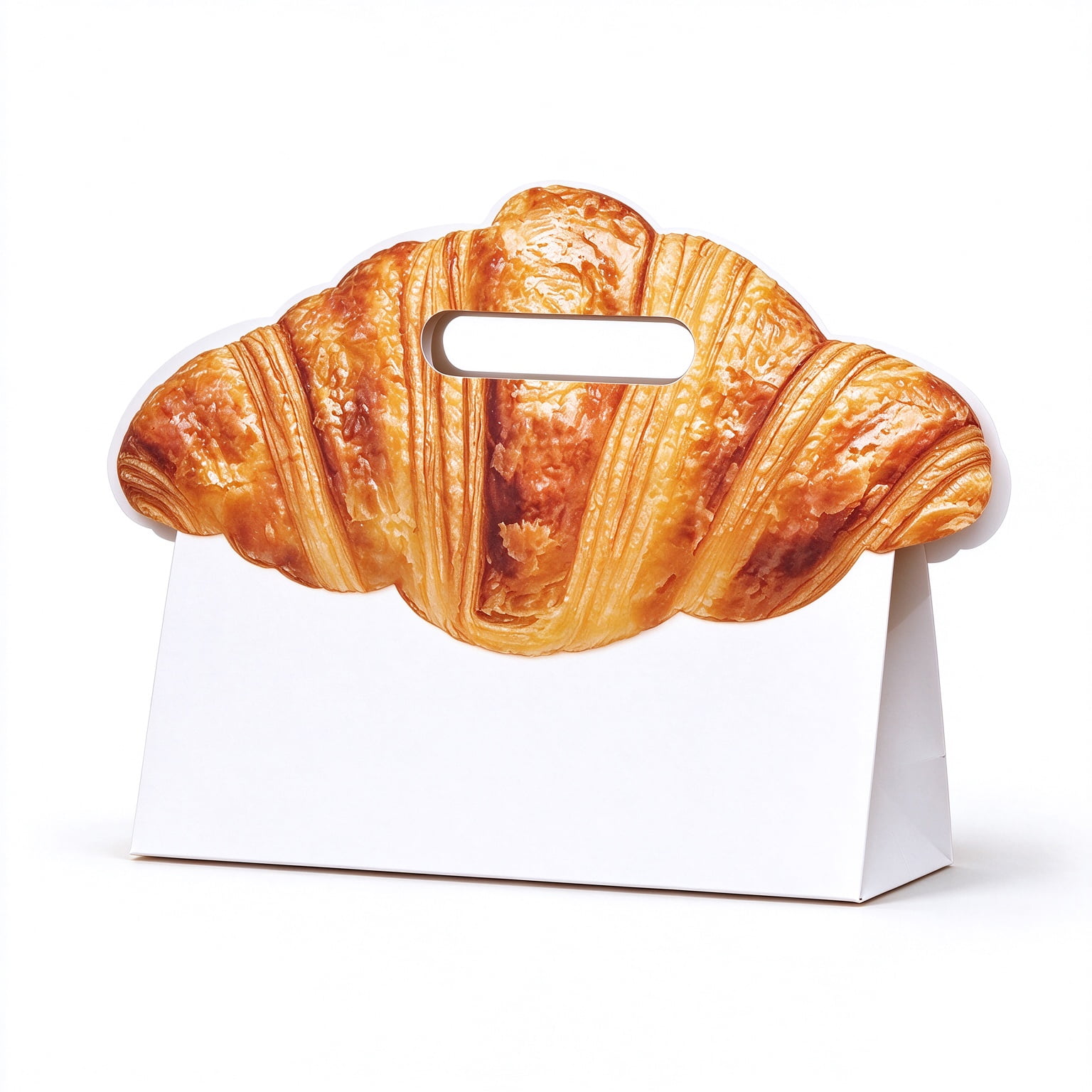
The handle area of the bag is laser die-cut 1:1 to the true outline of the bakery item, whether a croissant or a baguette. Carried down the street, the packaging becomes a moving billboard, strengthening brand recognition and adding a sense of play.
2. Stable holders and compartmented carriers: protection meets ventilated display
Conventional takeaway packing stacks meal boxes inside one large paper bag. The stack tips and spills while walking, and the steam released inside softens pastries and fried items, spoiling the texture.
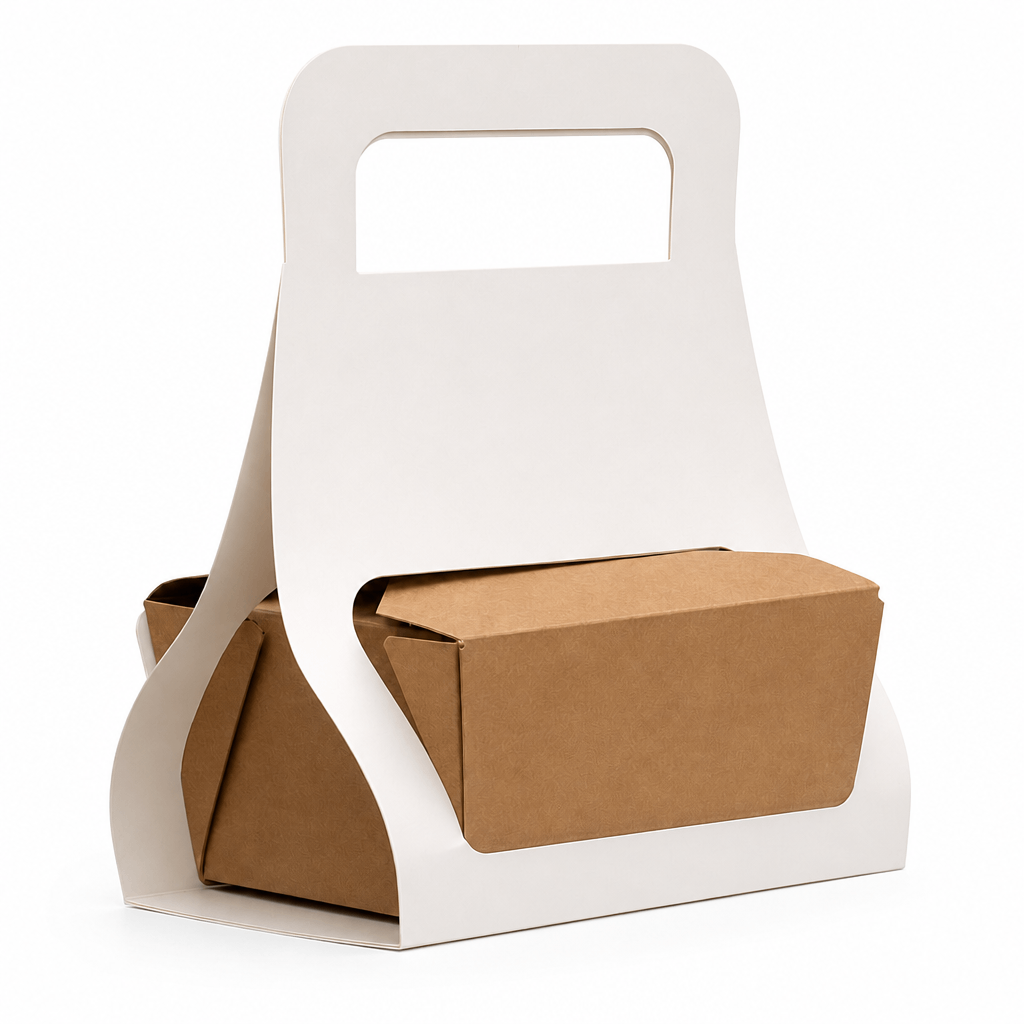
Integrated arc-shaped meal-box carrier: a clean arch handle over a base tray holds the meal box steady, while the open sides provide natural ventilation — no trapped steam, and a light, airy premium look;
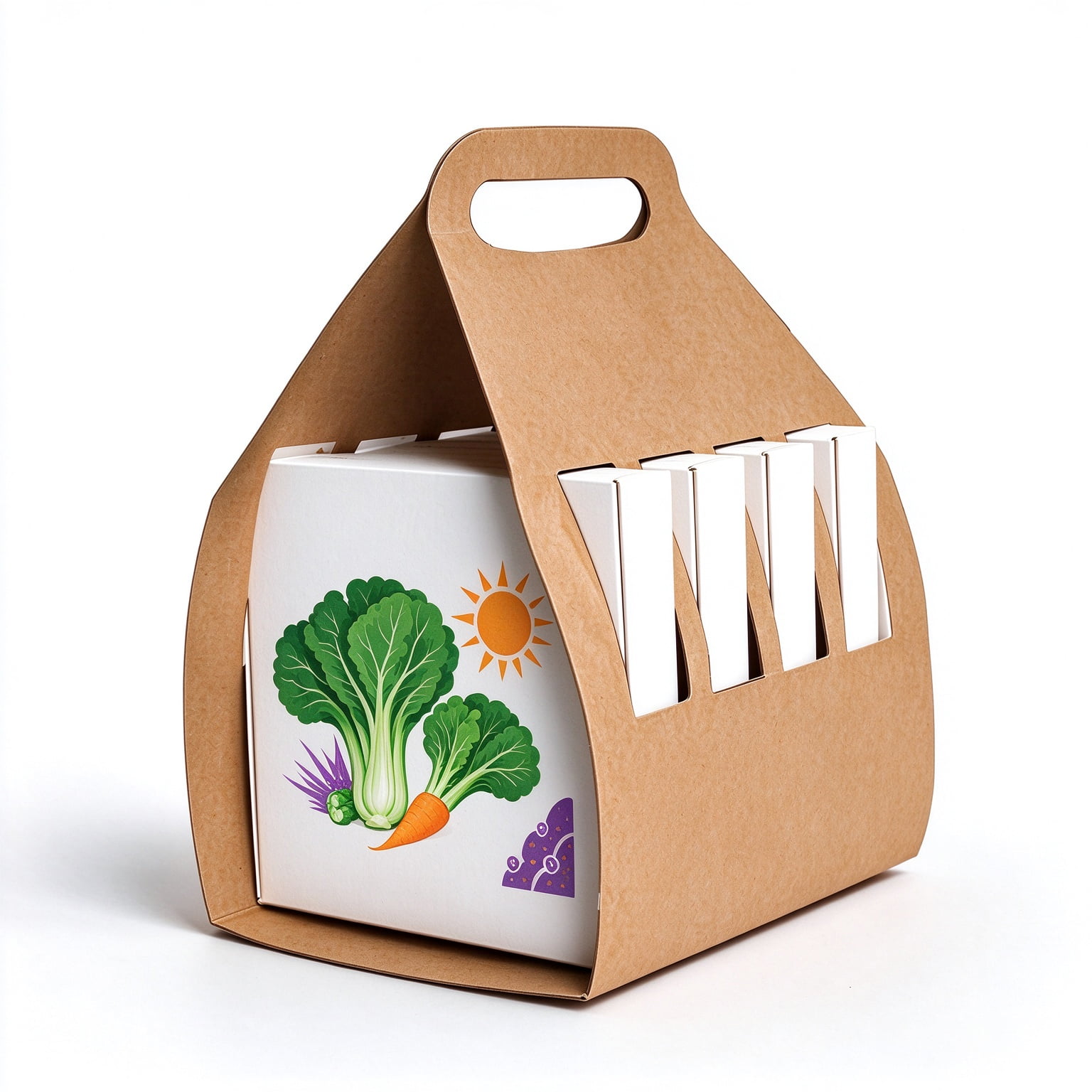
House-shaped multi-compartment carrier: clever three-dimensional slots on the sides lock several long pastry or light-food boxes in place; each box carries its own load without pressing against the next, so takeaway carrying feels secure.
Whether in a specialty coffee shop, a fresh tea store or a corporate meeting coffee break, carrying several hot drinks has always been the difficult part of packaging design.
1. The pain points of conventional packing
The usual approach stuffs a coarse corrugated cup tray or a foam holder into an ordinary large paper bag. The load shifts and tips, hot drinks spill, and the assembly is awkward to dismantle, hard to recycle and looks messy in business or social settings.
2. Fold-out integrated cup-holder paper bag
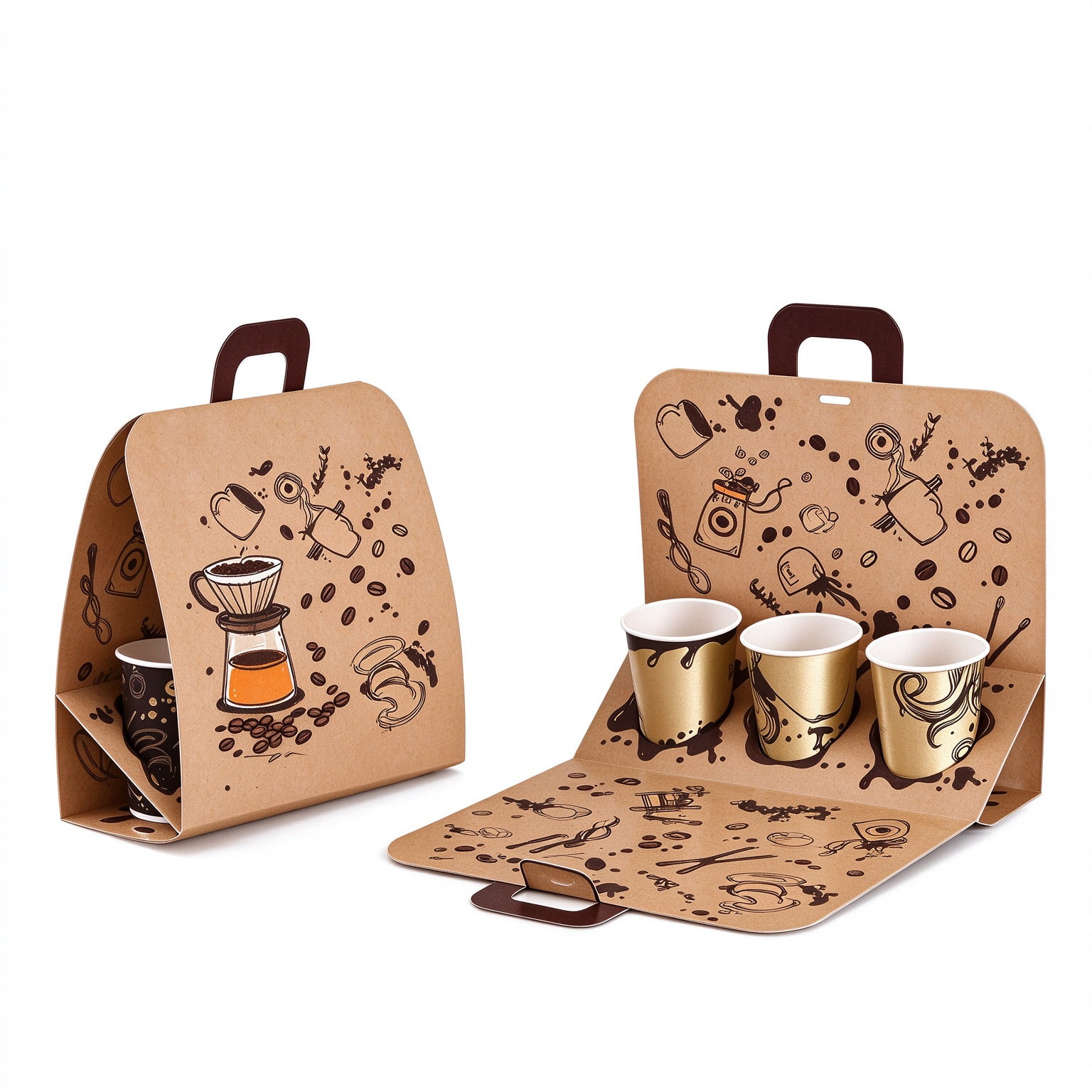
Flat storage, formed in one pull: before assembly the bag is a completely flat single-sheet structure that takes no warehouse or container space; at the counter, unfolding along the crease lines instantly forms a stable base with pre-cut circular holes;
Anti-tipping and precise positioning: the base holes hold two to three cups of coffee or other drinks firmly; the cup bodies stay locked in position and do not tip or knock together while walking or riding in a vehicle;
Cross-category extension: this multi-hole positioning structure suits not only coffee and milk tea, but also high-end essential-oil bottles, handmade scented candles and glass skincare sets for display and gift carrying.
As affluent households turn to organic farming, premium fruit gift boxes and green fresh food, agricultural packaging is moving from plastic crates and mesh sleeves towards designed, refined formats.
1. Biomimetic aesthetics that signal genuinely natural quality
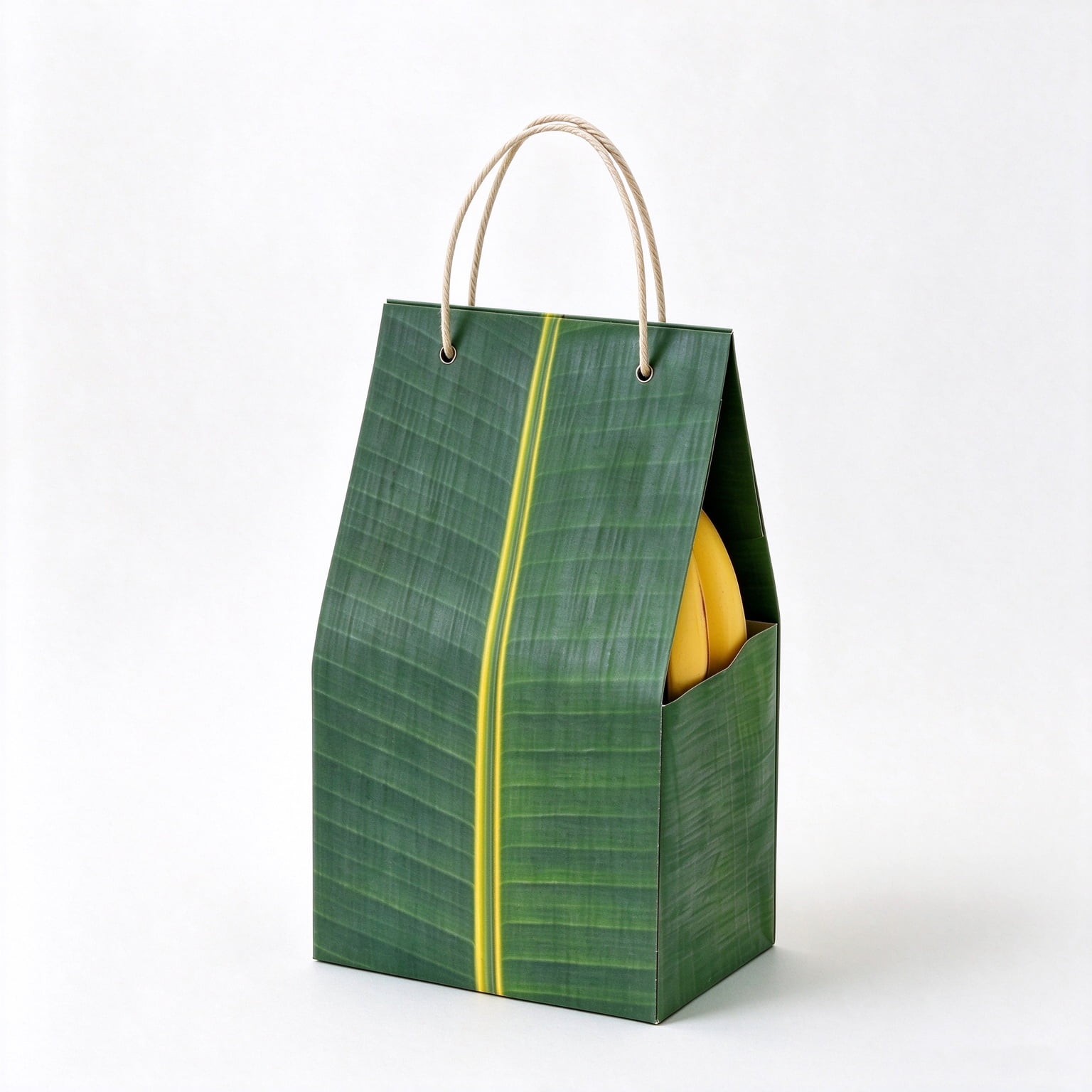
The bag surface is rendered as realistic banana leaf, woven bamboo or natural wood grain, with a semicircular die-cut window on the side so the full, fresh fruit shows through. This visual language — nature wrapping nature — communicates just-picked freshness and lifts the gifting premium of the produce.
2. Preventing compression and encouraging airflow
Fruit and vegetables respire, and fully sealed packaging accelerates heat build-up and spoilage. Bags with side windows or ventilated dividers keep the air moving while the fruit is carried, extending shelf freshness.
For annual corporate appreciation events, business functions and festive gifting, souvenir boxes and gift sets are an important vehicle for brand goodwill. The conventional approach fills an inner box and then slips it into a large paper bag: fussy to assemble, and the box slides and tilts inside.
1. Structural ingenuity: the outer handle and the inner gift box form one unit
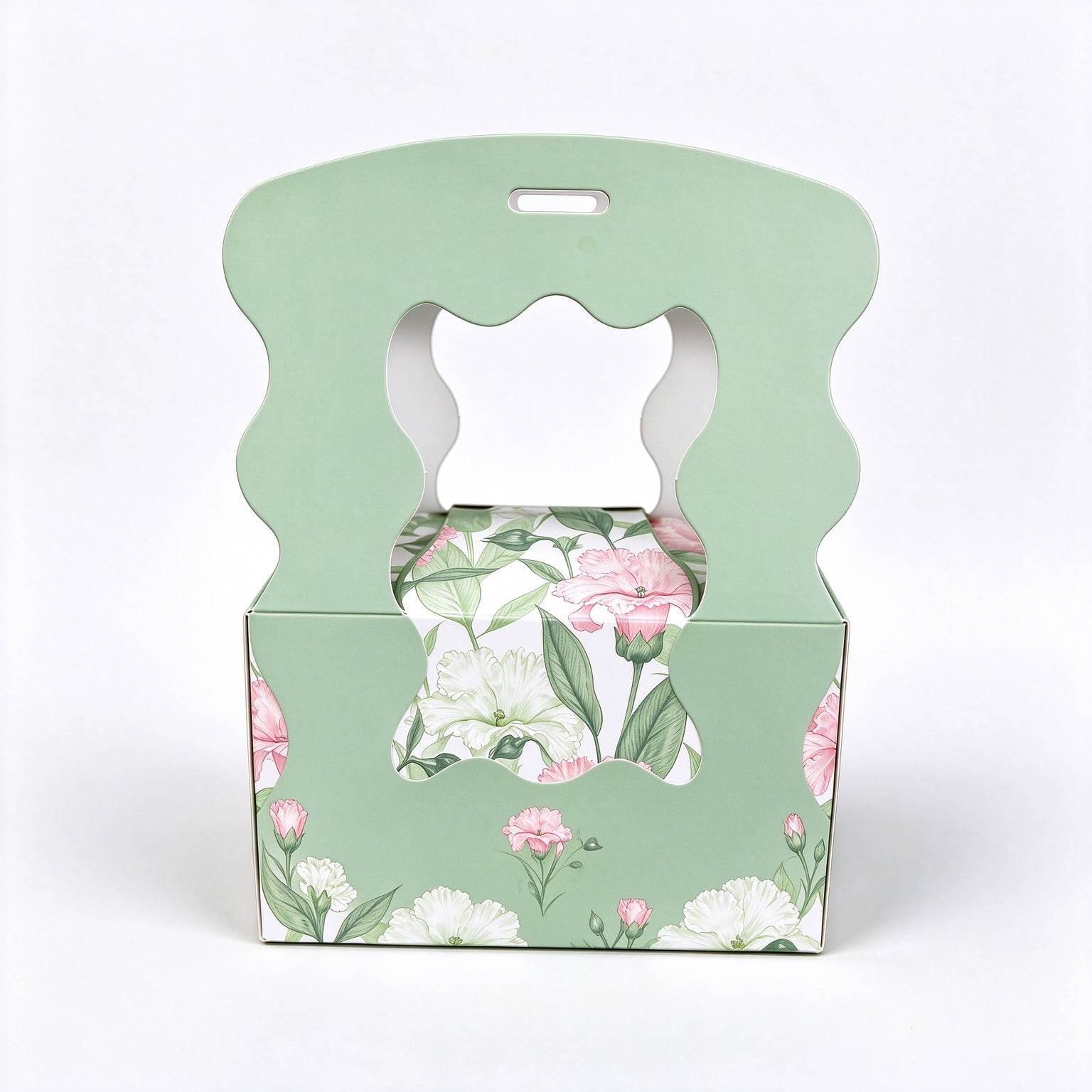
Clever windows that reveal the inner box: both the front and back of the outer carrier have large transparent openings, cut with soft, elegant wave curves. Once the gift box is loaded, its printed pattern and texture show through, so the restrained outer frame and the refined inner box set each other off — richer layering and a more ceremonial unboxing;
One-piece formed handle, stable and shake-free: the carrier has a punched handle at the top that fits tightly against the inner box, removing the cost of buying and matching a separate outer bag; the load stays centred and upright, presenting a composed, high-grade look for premium tea sets, beauty and skincare boxes or custom souvenirs.
Q1: These irregular, multi-compartment bags look complex — will packing in store be slow and fiddly?
Quite the opposite. Well-designed structures follow the "pre-creased self-locking" principle: they ship flat and stacked, taking no storage space; in store, a light push on both sides along the creases locks the base and the internal dividers into shape — two to three seconds with one hand, far faster than the traditional routine of bagging, adding an extra cup tray and then sealing.
Q2: With large cut-outs and windows, is the load-bearing performance safe enough?
Open structures place high demands on the paper grade and on the mechanical design. We normally use 250–350 gsm high-stiffness virgin white card or high-toughness natural kraft, and add radius buffers at the key folded load points to avoid the stress tearing caused by right-angle die-cutting, so the bag stays rigid and undistorted under a 3–5 kg load.
Q3: If we want to develop an irregular bag for our own product, what are the MOQ and the process?
A: Irregular bags require a dedicated laser cutting die. We support small first runs of 500 to 1,000 pieces (the sampling fee can be credited against the bulk order as agreed).
The process is: send product dimensions and weight → we return the structural proposal and die drawing → physical samples in three to five days for confirmation → bulk production and delivery.
Packaging extends the product, and it speaks for the brand without a voice.
We support clients across industries with one-stop service, from structural development and physical sampling to volume manufacturing:
Free structural assessment: send your product dimensions or concept, and our team will match the mechanics and the die design to it;
Full-range physical sample kits: ready-made irregular structures, specialty paper grades and process accessories, so you can confirm hand-feel and performance directly.
Sampling support: one-to-one sample confirmation for brand-new concepts that are not yet in production.
Contact us now for a tailored structural proposal and an accurate ex-works quotation.

