 EN

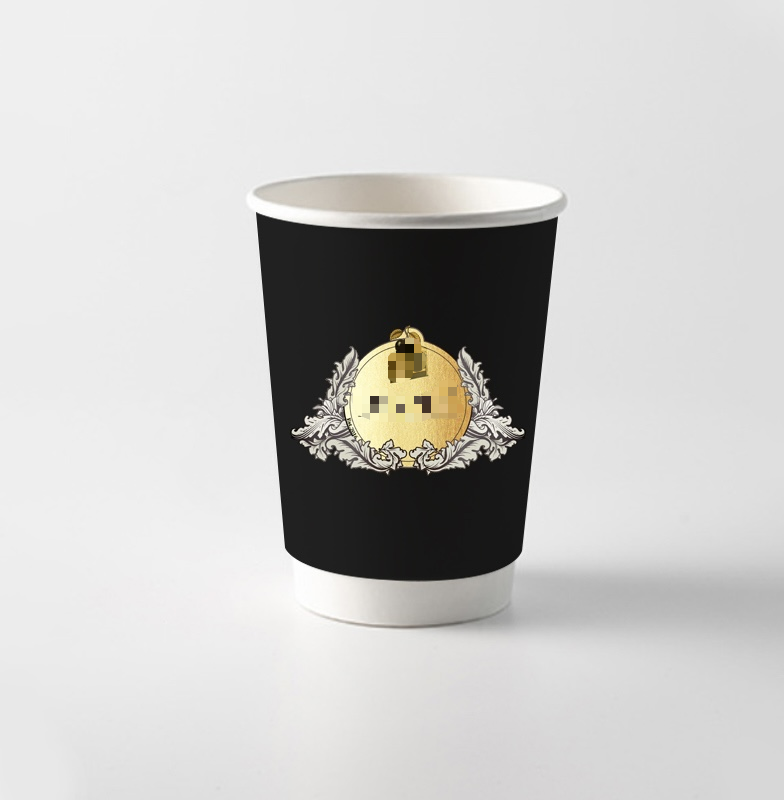
In the packaging export industry, many practitioners simplify custom orders to merely receiving client artwork, confirming the dimensions, and directly scheduling production. However, orders involving special processes like hot stamping are actually much more complex. The final product effect envisioned by the client is influenced by the materials themselves, process capabilities, and the regulations of the target country. Clients are not just purchasing a batch of paper cups; they also require a complete set of implementation services: organizing scattered requirements into an executable plan, avoiding process defects, complying with local regulations, and ultimately delivering goods that meet brand standards.
This case serves a multi-store bakery commercial client in Europe, with the project being the customization of double-layer paper cups. Within the limited printing area on the cup body, it must simultaneously carry the brand QR code, safety warning statements, and the EU statutory marks. This category belongs to food contact materials, and local regulatory authorities have mandatory standards for both the printing content and the minimum specifications of the marks.
Organize customers' vague requirements and turn ideas into assessable plans
During the initial communication, the client clearly stated their requirements: double-layer paper cups, specified dimensions, and logo in gold stamping. However, the reference images provided by the client were not executable printing design files, and much of the product implementation details were not clearly expressed. For example: actual usage dimensions, material, size of the gold stamping area, and the color of the aluminum foil are professional questions that most of our clients are unfamiliar with. As for the cup surface treatment—balancing between matte and glossy—he wanted to see the actual effects of both combinations.
We did not make decisions directly for the client but provided reference solutions based on the actual gold stamping effect: a glossy black cup combined with glossy gold stamping easily causes visual interference, while a matte base better highlights the metallic luster of the gold stamping. We explained the actual pros and cons of both options through text and video.
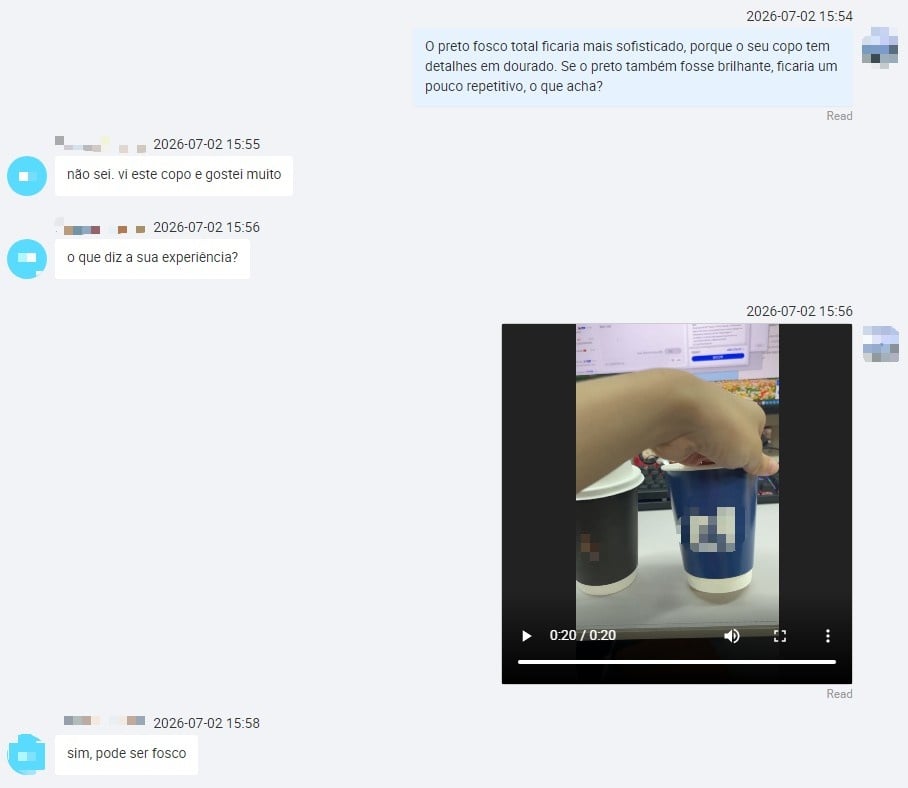
Later, regarding the choice of lids: plastic cup lids and biodegradable bagasse cup lids; we also analyze from a neutral perspective for the client, considering the advantages and disadvantages of the products as well as their differences. For example, plastic cup lids have the highest market usage and offer extremely high cost-effectiveness, whereas bagasse cup lids are a new favorite in the market, emphasizing the brand concept: environmentally friendly and biodegradable, but they are expensive. Considering the client’s boutique startup brand, their strong focus on brand image, and the quantity purchased, the client ultimately chose the higher-quality bagasse cup lids.
This is the experience we've learned from years of communication with custom clients: in custom projects, buyers may not be able to accurately predict the final product, especially in printing processes such as spot colors, hot stamping, and relief techniques. The value of suppliers lies in pointing out potential issues in advance from the perspective of finished products, presenting them through text, video, samples, and other forms.
In a limited cup body layout, balancing brand impact, craftsmanship capability, and local regulations
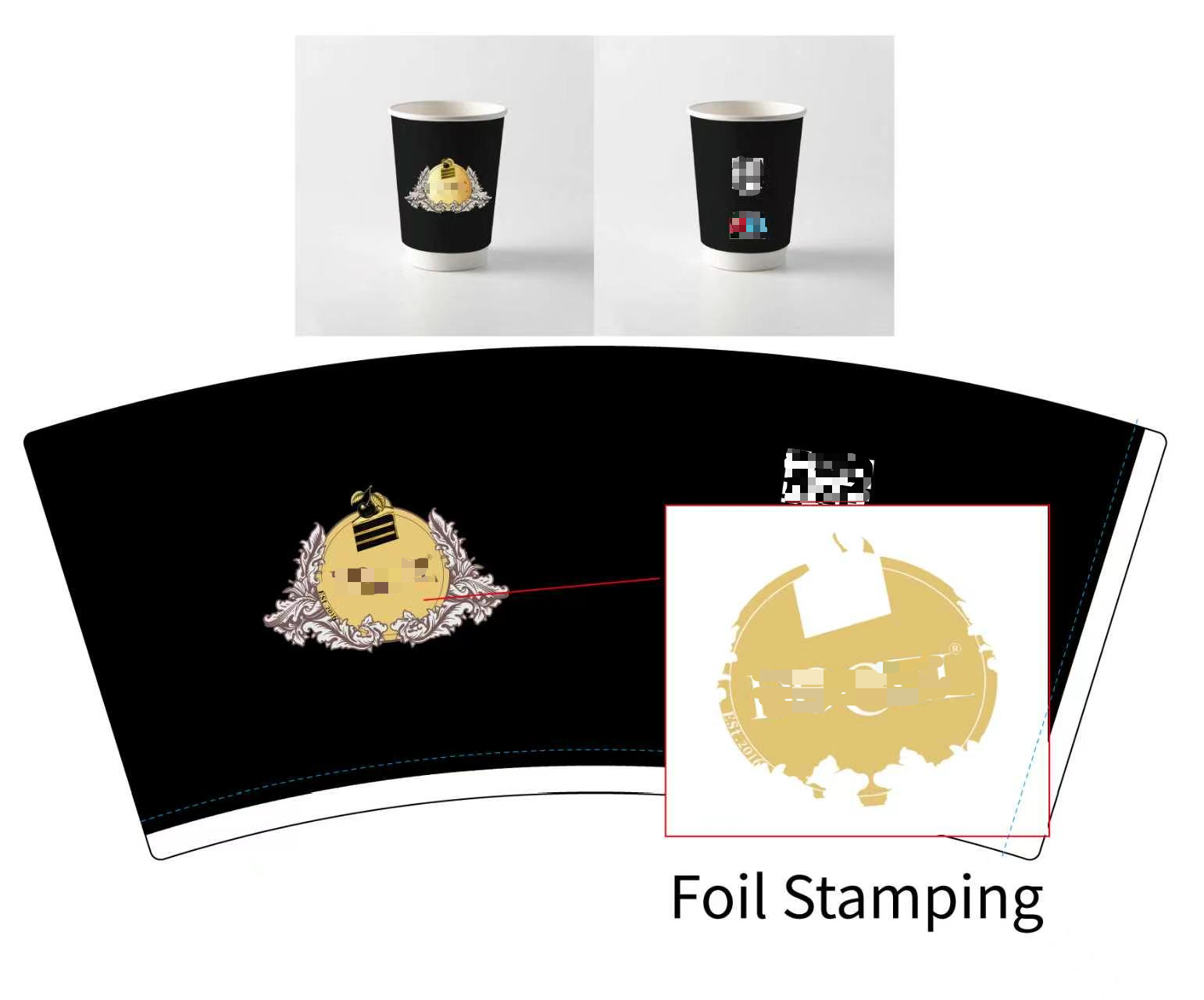
The main difficulty of this project is concentrated on the design of the back of the paper cup. The printable area on the cup body is very small, yet it needs to accommodate a hot-stamped logo, the customer's QR code, safety warning statements, and bilingual mandatory EU markings, with regulated sizes for the markings. With so many elements piled together, it's very easy to end up with messy layout, non-compliance, or some designs being unachievable.
Clarify the boundaries of the hot-stamping process
The customer initially wanted the logo and patterns to all be done in hot stamping. However, in reality, the hot-stamping process has production standards for details, and not every pattern can be hot-stamped. For example: 1–2mm tiny text, lines finer than 0.1mm, QR code squares in hot stamping, and gradient effects. In mass production, these can easily lead to problems such as broken strokes, missing characters, misaligned patterns, smudged gold, and peeling of gold foil.
We clearly define the areas that can be executed with hot stamping and those that only support flat printing. We then explain the practical limitations to the customer and jointly determine a solution that can be mass-produced.
Multiple rounds of design revisions, balancing aesthetics and compliance
Referring to the physical samples provided by the client, repeatedly produce multiple versions of high-resolution PDF design drafts:
Strictly follow local regulations, placing the EU mandatory markings in both the local language and English, ensuring that the markings meet the minimum size required by law.
Adjust the size of the QR code to ensure it can be scanned by mobile phones while not taking up too much space on the cup. Implement additional design requests proposed by the client.
Before production, we proactively inform the client that the printing ink is mixed manually, and the colors seen on computer and mobile screens may slightly differ from the actual printed cups. This is a common situation in the printing industry, and informing the client in advance helps avoid disputes over color later.
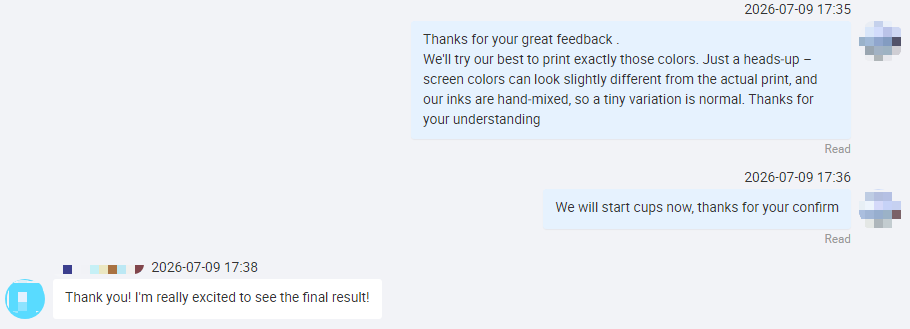
Inspection of mass-produced goods through real shots to eliminate concerns about not seeing the physical items across borders.
Even after multiple rounds of confirmation of the design files, electronic drawings still have limitations. Screen images cannot truly reproduce the metallic luster of gold stamping. Overseas buyers cannot visit the factory in person to check the goods, and even if they approve the drawings, they may still worry that the actual product will not meet expectations.
After all mass-produced goods are completed, we do not arrange shipping immediately:
We take clear photos and videos to fully showcase the gold-stamped logo effect and all printed content on the back of the cups.
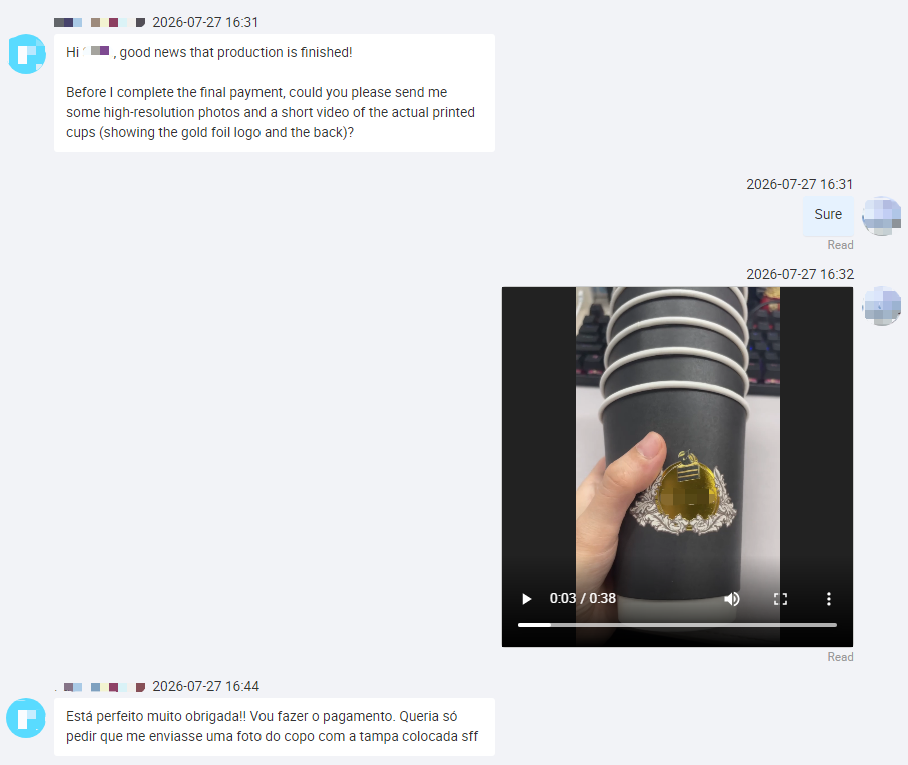
Take images of the complete finished product after the cup lid is installed;
Wait for the customer to confirm that they are satisfied with the actual bulk goods before proceeding with the final payment settlement and arranging shipment.
Intercept quality risks at the factory end to avoid business losses caused by discovering discrepancies in effect only after cross-border delivery.
Project Review: Core Reasons Why the Client Chose Us
This project reached cooperation, and price was not the decisive factor. What the client purchased was a complete customized solution.
1. Professionalism
Familiar with the practical production limitations of special processes, we do not schedule production immediately upon receiving drawings, but instead anticipate potential production risks in special processes and printing procedures in advance.
2. Service
Every round of design modifications and appearance selection is confirmed in writing by the client, avoiding misunderstandings from verbal communication and reducing common disputes in customized orders.
3. Compliance
Design not only pursues visual effects but also complies with EU packaging regulations, avoiding the risk that the finished product cannot be sold locally.
4. Patience
We integrate the client's fragmented brand demands for presenting hot stamping on paper cups, transforming creative ideas into compliant and mass-producible packaging products.
5. Reliable Delivery
Fully aware that electronic drawings may have visual color differences and effect deviations, we provide actual product photos before shipment, addressing the pain point of overseas clients being unable to inspect the products on-site.
Conclusion
Currently, competition in the packaging industry is still largely focused on pricing, but pricing is only the basis for entering the business. Producing visually appealing design drafts is relatively easy; the true core competitiveness lies in producing physical products that meet brand expectations and are compliant and usable. This is the real core capability of a packaging service provider.
If you are looking for a partner for customized packaging with special processes for the European market, we offer a complete one-stop service, including demand analysis, process evaluation, design layout, and full support for compliance document delivery.