 EN


The sustainability of kraft bowls is decided by four things, and only one of them is the colour of the paper. Fibre source, bleaching, the lining, and the disposal route the customer actually has — get all four right and the claim holds; miss the lining and the bowl is a renewable container that still goes to landfill.
This article works through those four, then covers the performance and cost that come attached to them.
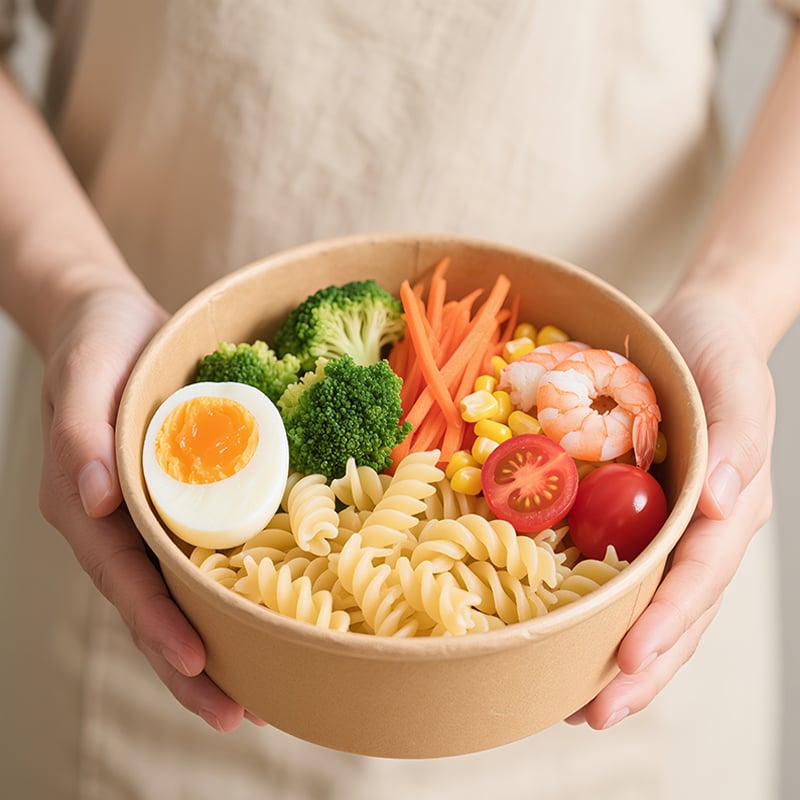
Four Things That Decide the Claim
1. Fibre Source
Kraft bowls are made from virgin wood pulp, recycled fibre, or a blend. Virgin pulp gives the strongest sheet and the cleanest print surface; recycled fibre reduces demand for new trees but shortens the fibre, so a recycled bowl needs a slightly heavier wall for the same stiffness. Both can be legitimate — the question is whether the source is documented.
Chain-of-custody certification is the only way to answer that. A logo on a brochure is not evidence, and a certificate that names the board and the mill is worth more than a page of environmental statements.
2. Bleaching
The brown tone of kraft bowls comes from leaving more lignin in the sheet and skipping the bleaching that white board requires. That reduces chemical inputs and, usefully, leaves the fibres longer, which is part of why kraft bowls feel stronger at the same weight.
Elemental-chlorine-free pulp is now standard in food-grade board, so the more useful question is what the mill declares rather than whether the marketing says "unbleached".
3. The Lining
This is the decision that most often breaks the claim. Polyethylene gives the strongest moisture hold and rules out composting in most systems. A water-based coating keeps the bowl compatible with organic waste where a facility accepts food-soiled packaging, and it disperses at the pulper rather than needing separation. PLA sits between the two and will not break down in a home heap.
Coverage matters as much as chemistry: a coating applied too thinly leaves pinholes that appear as soft spots, and one applied too heavily creases at the seam. Neither shows up in a certificate.
4. The Disposal Route
A bowl is only as sustainable as the bin it reaches. Composting requires certification naming the finished bowl plus a facility that accepts food-soiled packaging. Recycling requires a mill that takes coated stock — and a bowl that is clean, which a used one rarely is.
Where neither exists, kraft bowls are still a renewable-material choice with lower regulatory exposure than plastic. That is a real benefit; it is just not the same claim as compostable.
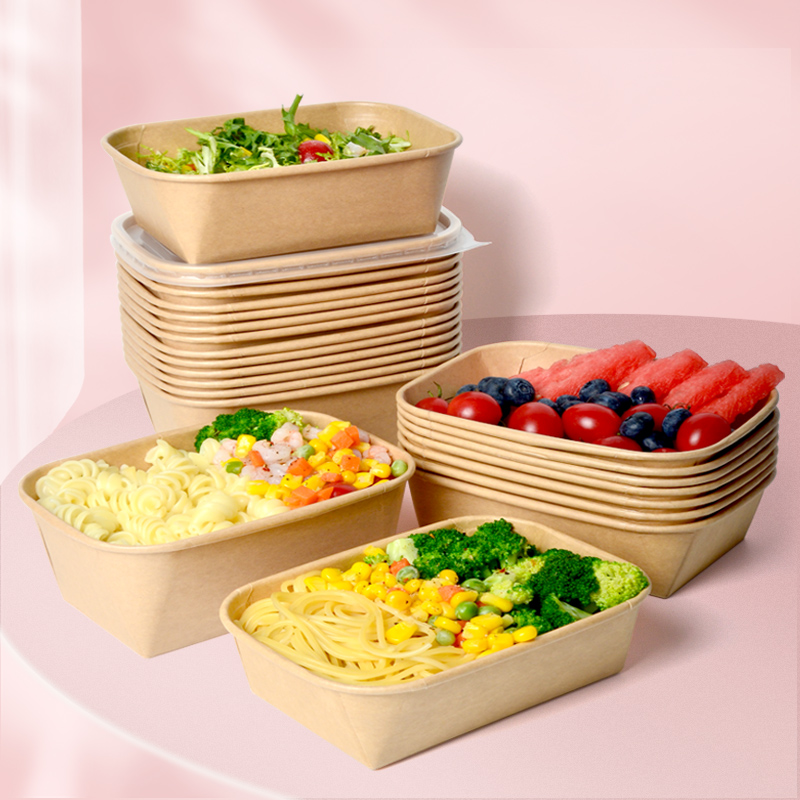
Performance That Comes With Kraft Bowls
Heat, Grease and Time
Kraft bowls handle hot, saucy food well when the barrier is right: the wall holds shape under a heavy portion and a rolled rim resists the deformation that starts most leaks. What fails is time. A bowl specified for a twenty-minute delivery can soften at forty, and the base seam is where it begins.
Grease is the second variable. Water-based coatings hold oil less strongly than PE, so an oily dish needs a dedicated grease-resistant grade. Specifying "kraft" without naming the grease requirement is how the base ends up translucent.
Structure and Stacking
Geometry decides whether kraft bowls feel solid. A rolled rim resists crushing, a tapered wall lets bowls nest and de-nest without jamming, and a stepped base spreads load away from the centre. Thickening the wall is the expensive way to add strength; changing the profile is cheaper.
Stacking should be tested with the real fill. Kraft bowls that pass empty can still crush under two loaded bowls in a delivery bag, and the bottom unit takes all of it.
Cost and Supply
Landed Cost, Not Piece Price
At volume, kraft bowls sit close to plastic on piece price and the differences move to freight and storage. Bowls are bulky: carton dimensions decide how many units fit in a container, and a taller carton can cost more across a shipment than a discount on the unit price saves.
Print and tooling are charged per run rather than per bowl, so a branded kraft bowl gets cheaper as quantity rises. Standardising on two or three sizes saves more than squeezing the unit price.
Capacity and Repeat Orders
Ask for the repeat-order lead time separately from the first order, then ask what allocation looks like in your busiest week. A factory running a dozen moulding machines at a daily output in the hundreds of thousands of pieces can absorb a spike; a small converter cannot.
| Claim | What it actually depends on |
|---|---|
| Renewable | Chain-of-custody certificate naming the board |
| Low-impact processing | Unbleached or ECF pulp; mill declaration |
| Compostable | Coating type plus a facility that accepts it |
| Recyclable | Coated-stock mill and a clean bowl |
| Plastic-free | Liner, lid and ink all declared |
FAQ
Are kraft bowls microwave-safe?
Usually yes, but the lid and any foil component may not be. Print the answer on the bowl; a customer who guesses wrong blames the food.
How do kraft bowls compare in cost with plastic?
Piece prices are often close at volume, and kraft usually wins on storage and freight per unit. Include the lid and the failure rate before deciding.
What is the best disposal option?
Composting, where certification and a facility exist; otherwise general waste. Clean kraft bowls may be accepted by mills that take coated stock, but greasy ones usually are not.
Do kraft bowls meet food safety standards?
When the construction is documented for food contact and the bowl is stored dry, yes. They are single-use by design and should not be reused after food contact.
Kraft bowls are a sustainable choice when the fibre is documented, the bleaching is minimal, the lining matches the waste route and the bowl is not asked to hold soup for two hours. Three out of four is a marketing claim; four out of four is a specification.